Water Damage Restoration Jacksonville, OR
24/7 water damage restoration in Jacksonville, OR, from Historic District masonry storefronts to homes in Pheasant Meadows and the Woodlands. The restoration team pumps out standing water, dries walls and framing to a set target and records every reading.
(888) 373-8814Standing water in Jacksonville? Call now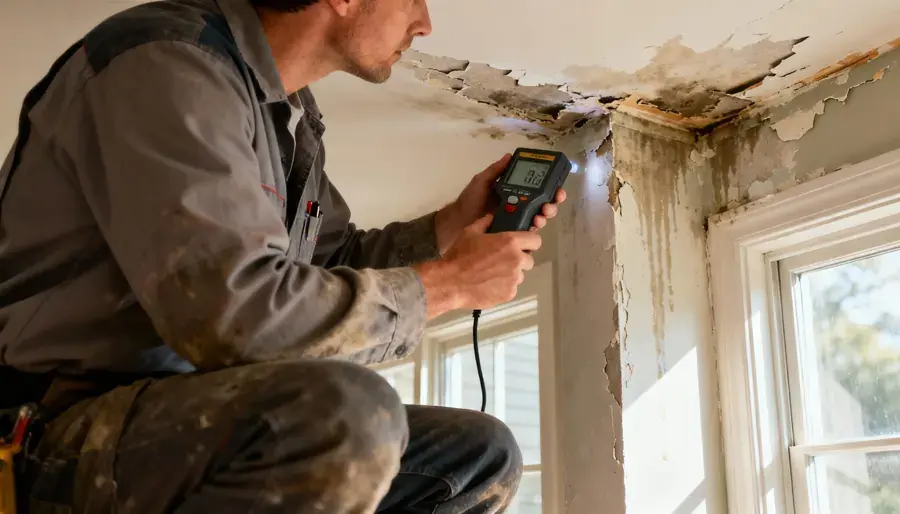 Jackson Creek
Your first moves when water is loose in a Jacksonville home
Wet framing and plaster hold moisture for days, so the first hour decides how much of the building has to be opened.
Do now
- 1Find the main shutoff. City of Jacksonville Public Works maintains the water system, so close the valve where the service pipe enters the building
- 2Cut the power. Flip the breakers serving wet rooms while standing on a dry floor, and skip the panel entirely if it is damp
- 3Photograph the damage. Shoot the whole room, the source and every stain edge on walls and ceilings before furniture moves or anything is thrown out
- 4Protect what moves. Lift rugs and electronics off wet floors, and pull books and framed art away from damp plaster or shared walls
- 5Then call. Report which rooms are wet, whether the source is a pipe, a creek or a drain, and who shares a wall with the leak
Hold off
- Stepping into water near outlets or cords
- Running a household vacuum over soaked carpet
- Cranking the heat to chase moisture from old walls
- Tearing out plaster before it is photographed
Water Damage Restoration Services in Jacksonville, OR
All fourteen services are tailored to Jacksonville's historic masonry, creek corridors, hillside streets and owner-occupied homes.
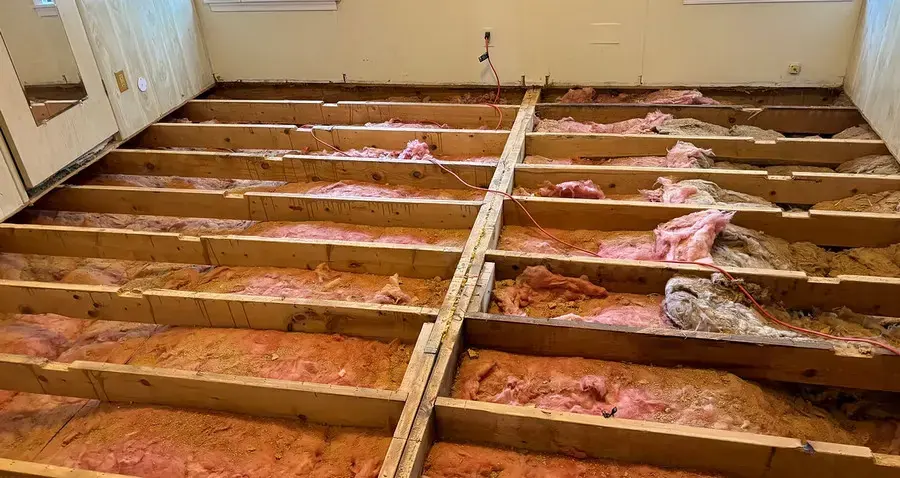
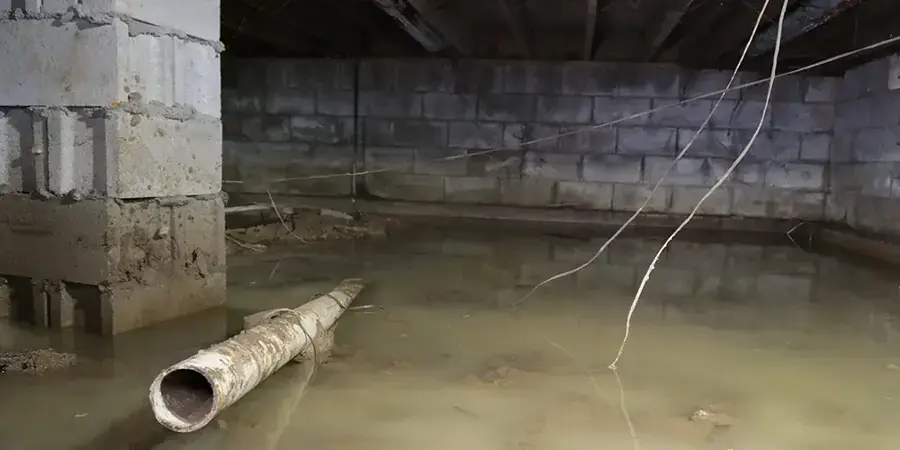
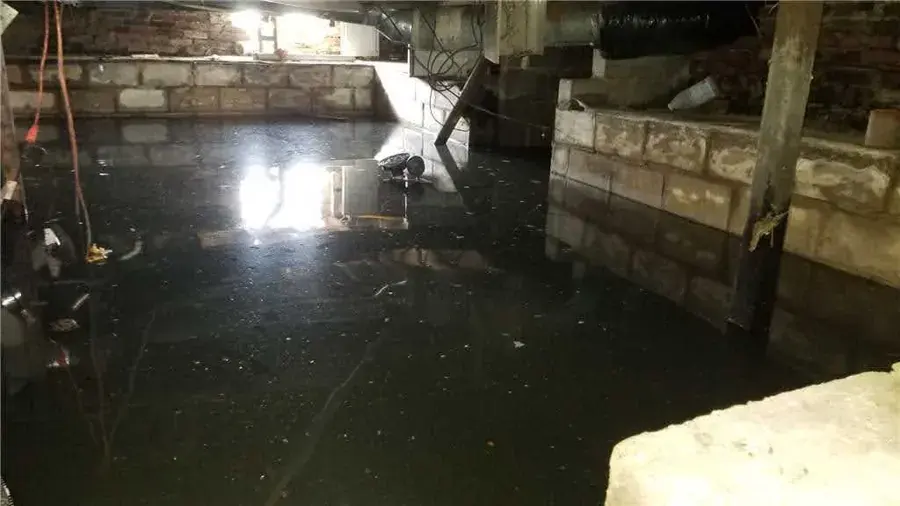 Crawl Space Water DamageWhere a home has a crawl space, water beneath the floor is pumped out and the framing dried.View service
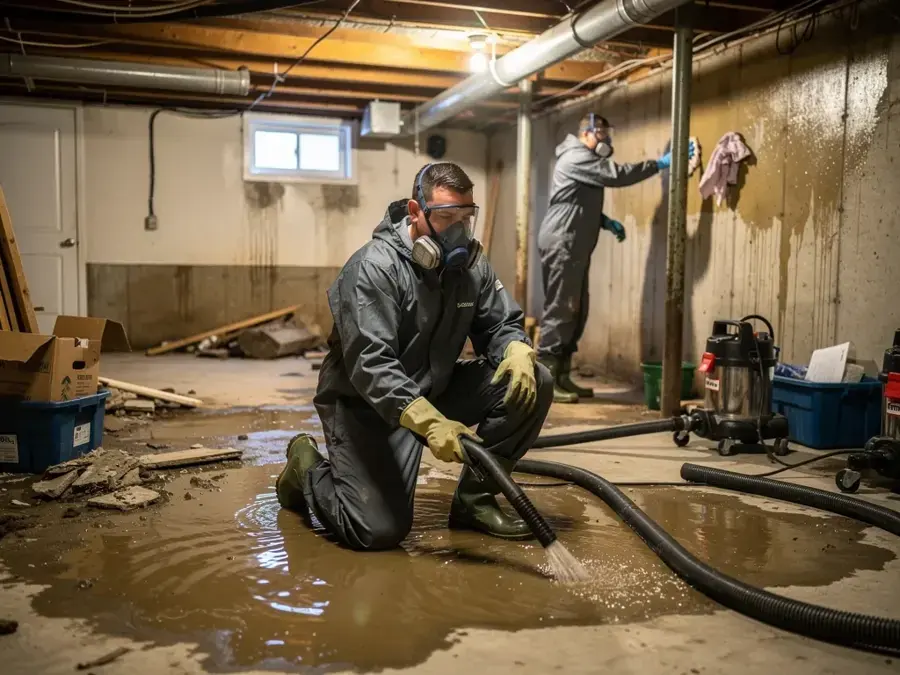 Flood Water CleanupJackson Creek or Daisy Creek overflow is treated as black water from the first step.View service
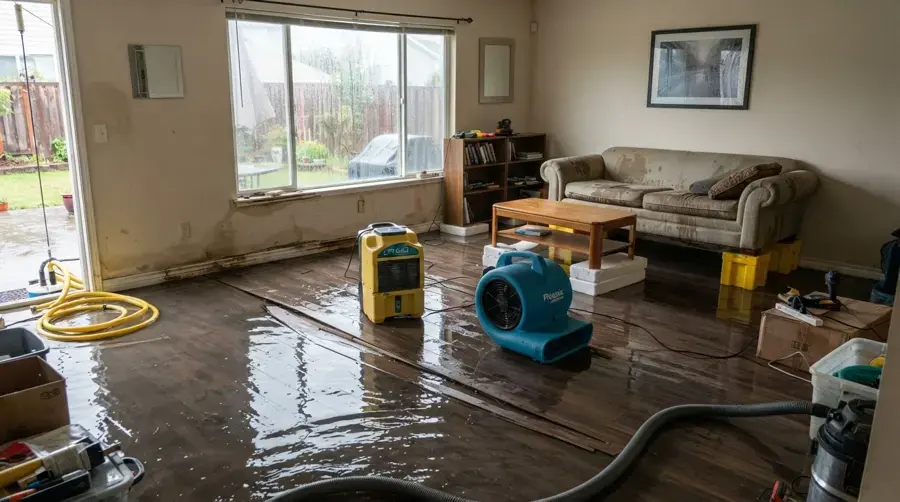 Water ExtractionStorm rain, creek overflow or a failed pipe: standing water is pulled out before it wicks into plaster.View service
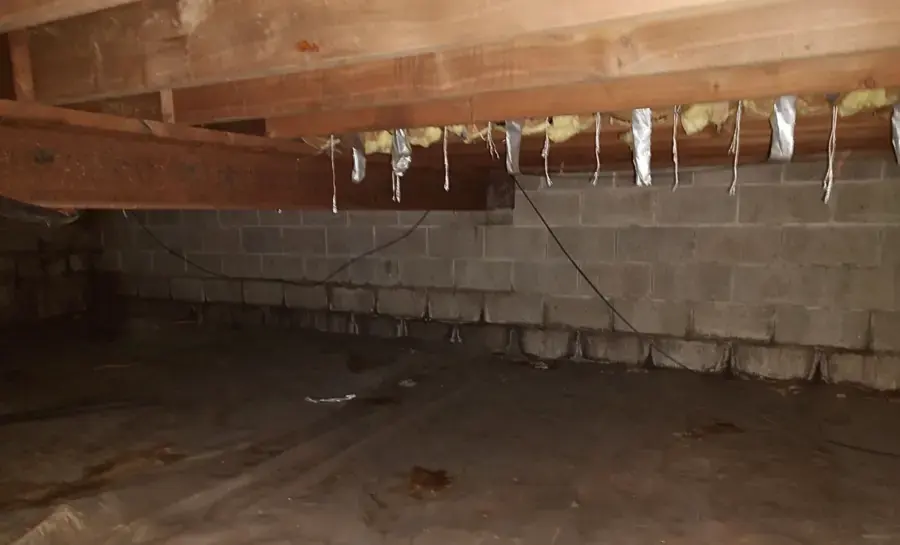 Frozen Pipe CleanupNights near 30 degrees split exposed pipe; soaked walls and flooring are dried afterward.View service
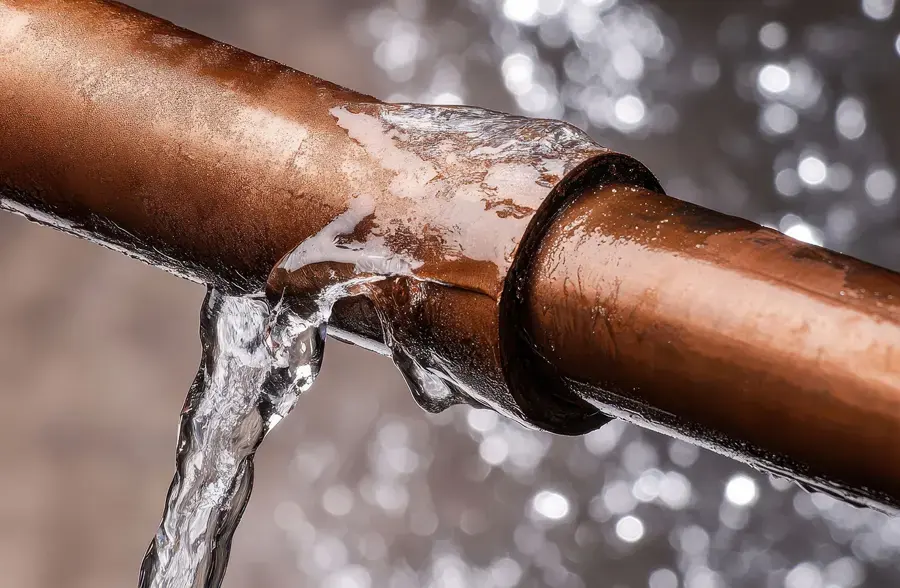 Burst Pipe CleanupPipe failures in homes built before 1990, dried inside the wall cavity and not only on the surface.View service
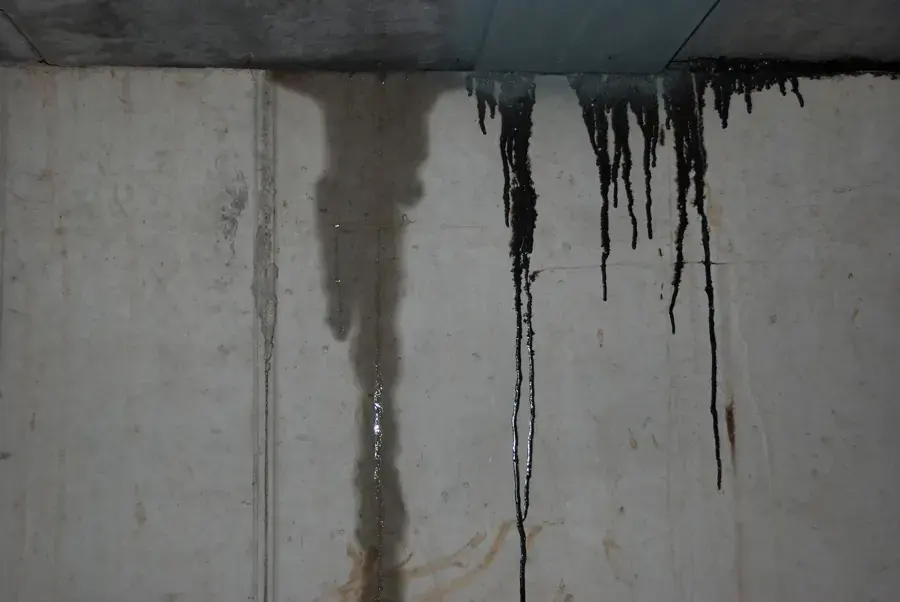 Storm Water DamageSnowmelt and warm rain pushed through roofs, windows and overloaded storm drainage.View service
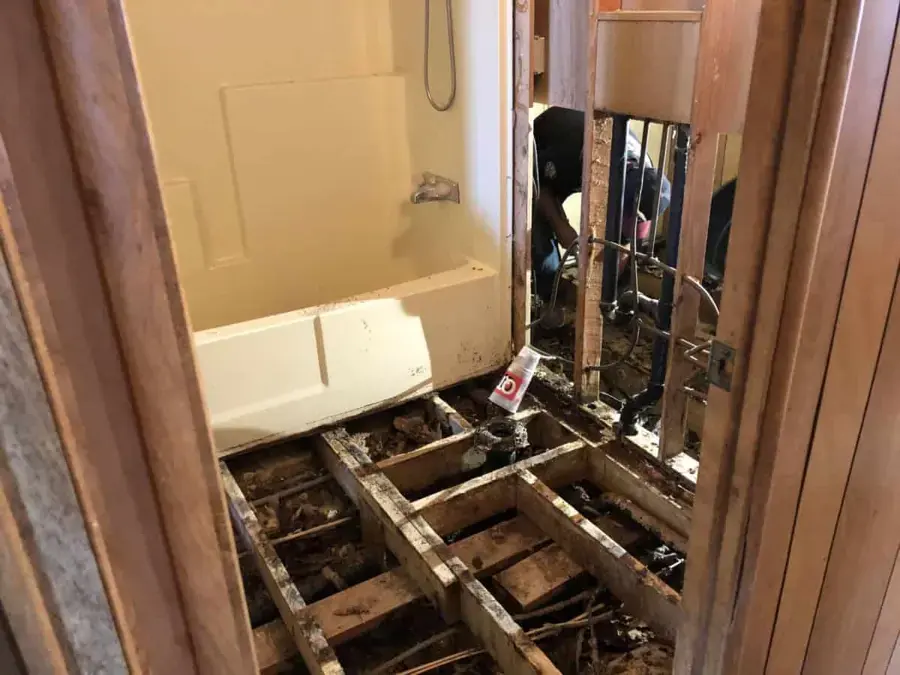 Manufactured Home Water DamageFloors, belly insulation and pipes dried in older homes at Royal Mobile Estates.View service
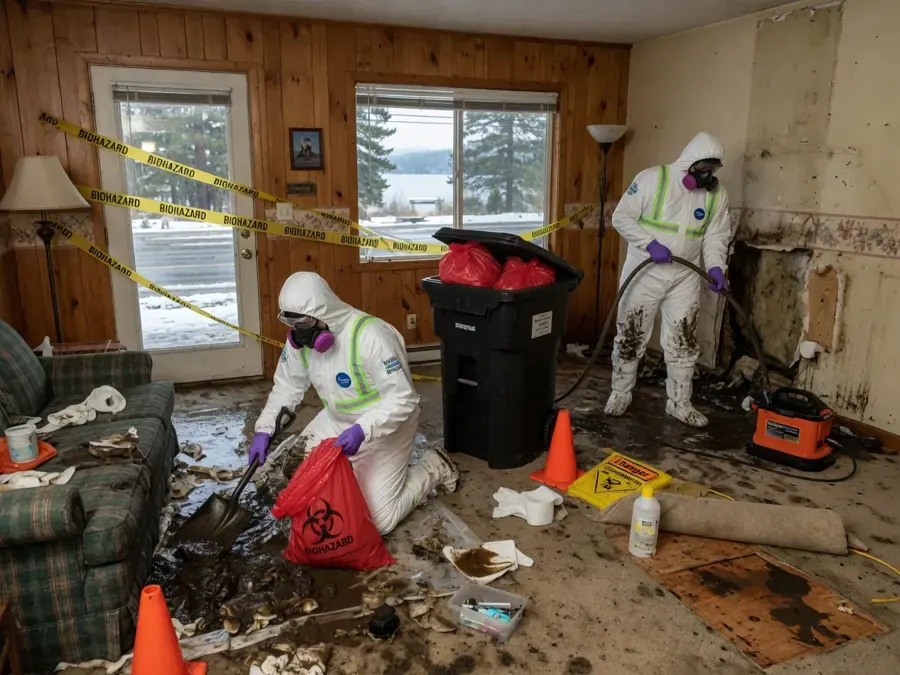 Sewage Backup CleanupOverflows from the public sewer or a blocked drain contained, removed and treated as Category 3.View service
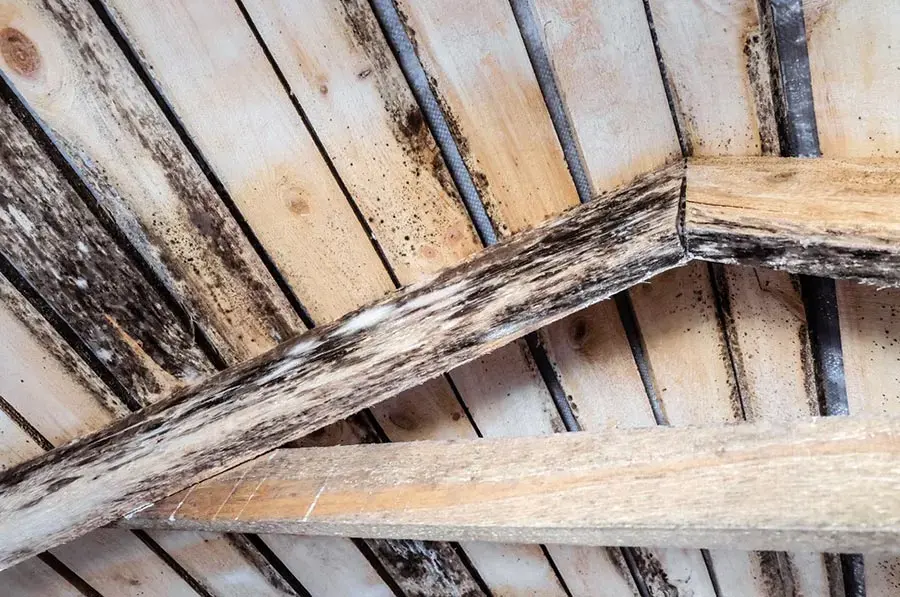 Roof Leak Water DamageWind and ice damage to historic core roofs, dried out before the ceiling below sags.View service
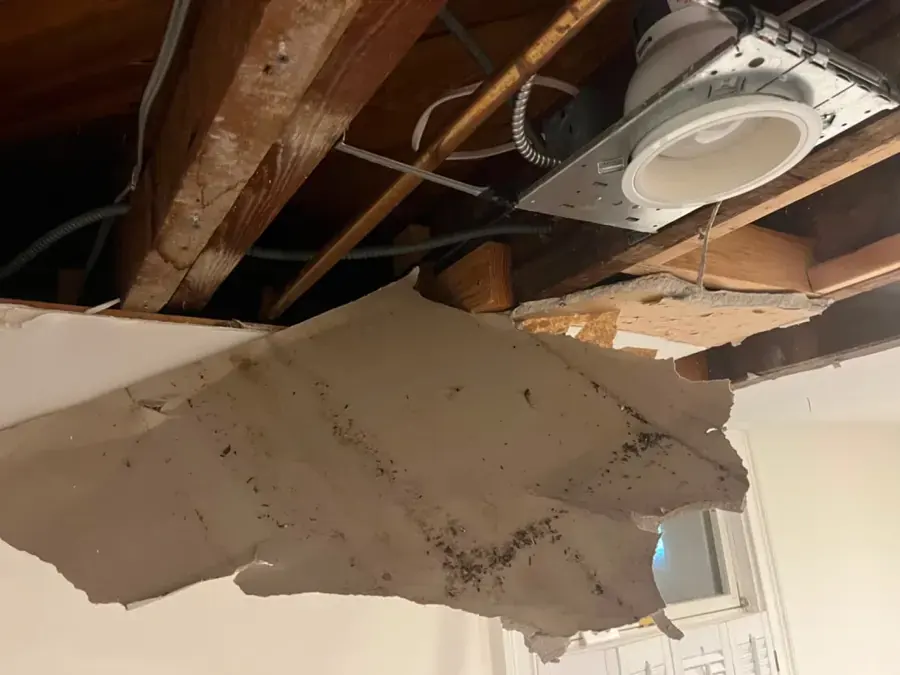 Ceiling Leak Water DamageA wet ceiling in an older building is opened and dried before drywall or plaster lets go.View service
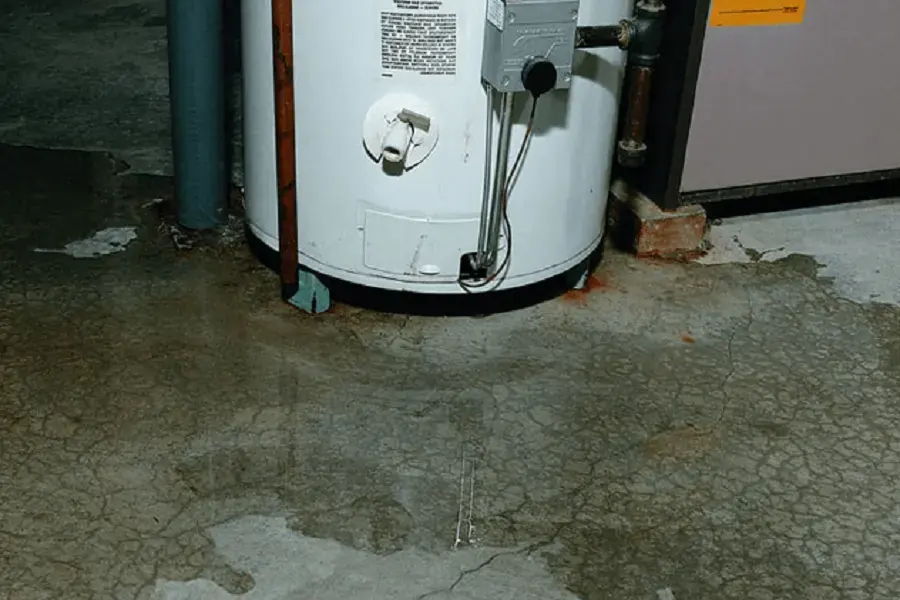 Water Heater Leak CleanupCloset and utility room tank leaks, with the flooring, walls and cabinetry nearby dried out.View service
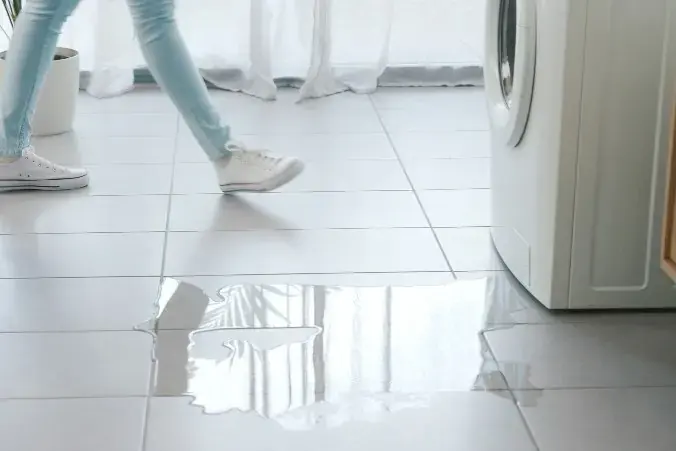 Appliance Leak CleanupA washer, dishwasher or ice-maker leak that ran unnoticed beneath a floor or cabinet.View service
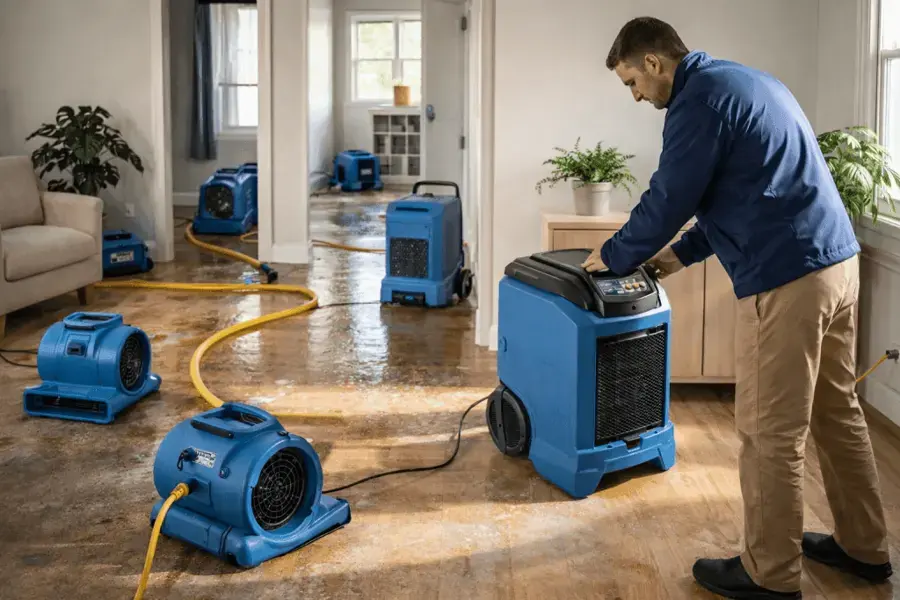 Structural DryingOld masonry, plaster and framing dried carefully, with readings logged against a clear goal.View service
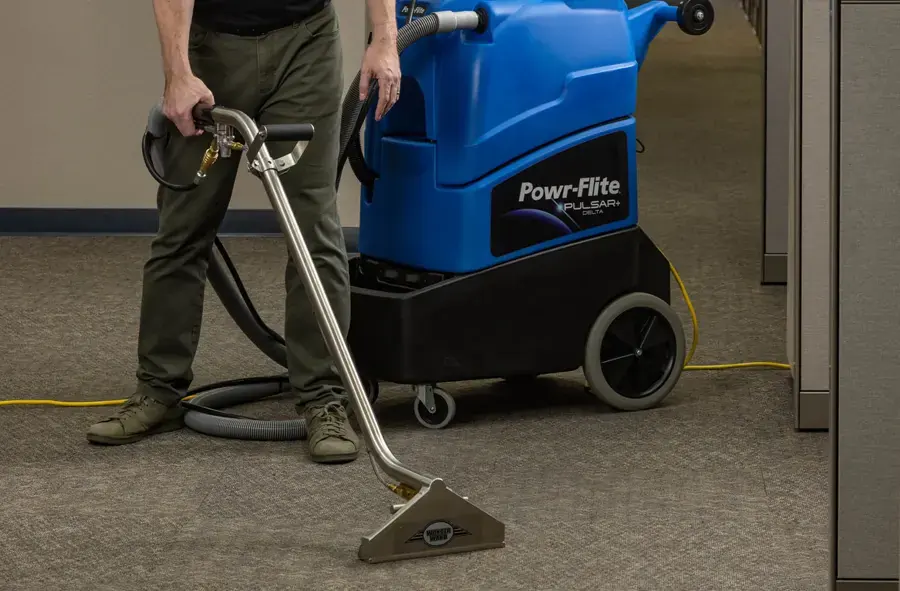 Commercial Water DamageInns, tasting rooms and shops along California Street and Oregon Street dried in phases.View service
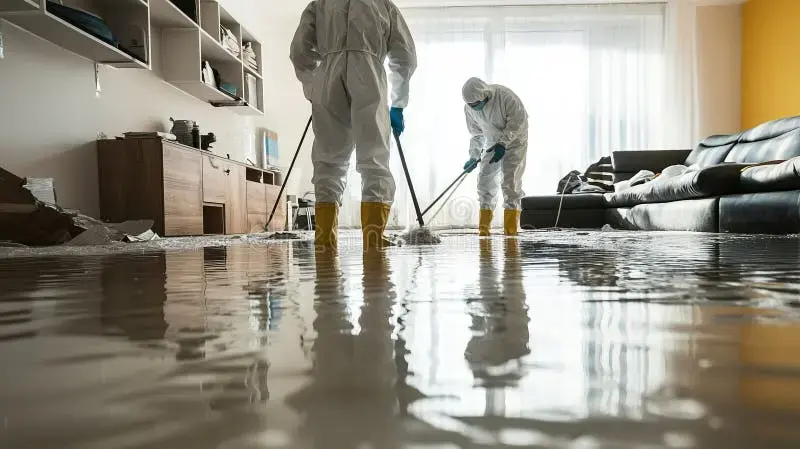
How the Jacksonville restoration team handles a water loss
Round-the-clock response
The restoration team answers water losses in Jacksonville at any hour, including winter storm nights when roads close, and treats moving water as urgent.
IICRC S500 drying
The drying crew follows IICRC S500 and keeps equipment running until meters read like dry material, not until a surface feels dry.
Documented for claims
Moisture maps, daily readings and dated photographs build a drying record that an adjuster, landlord or property manager can follow step by step.
Old buildings, newer homes
Historic core buildings from the 1850s through the 1880s sit beside 1990s homes in Pheasant Meadows, so the crew adjusts methods to each structure.
A Jacksonville dry-out measured against IICRC S500
Meters drive each decision, and the drying gear stays until readings show the structure has returned to its normal dry state.
- 1
Map the moisture
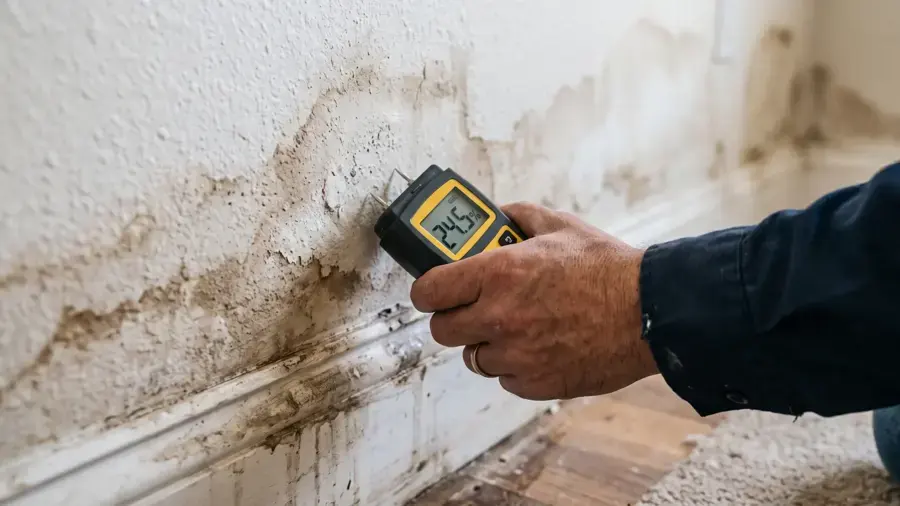
A thermal camera and pinless meters trace water through plaster, shared walls, framing and flooring before any equipment is placed.
- 2
Extract the water
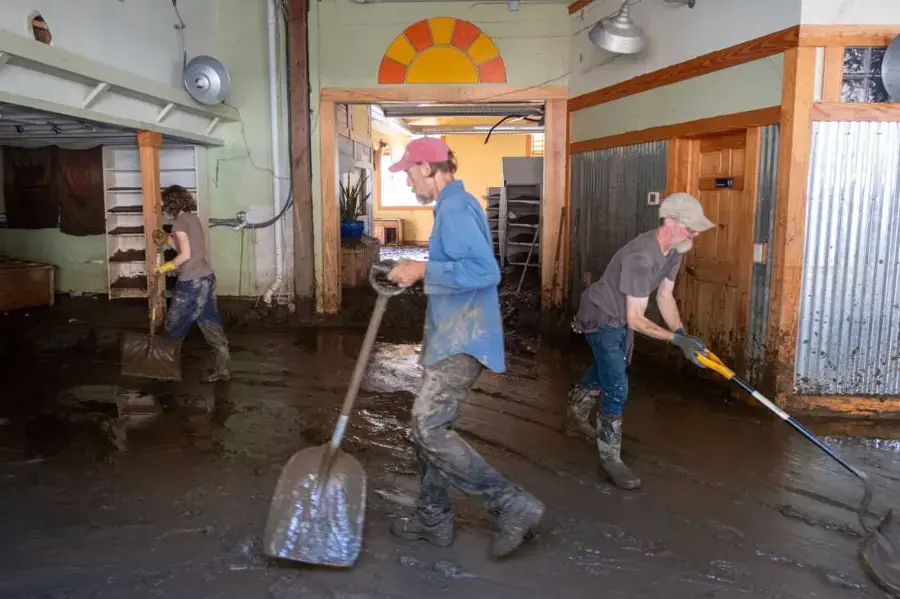
Truck-mounted and portable units pull standing water off floors and out of low spots before it spreads into the walls.
- 3
Set the drying
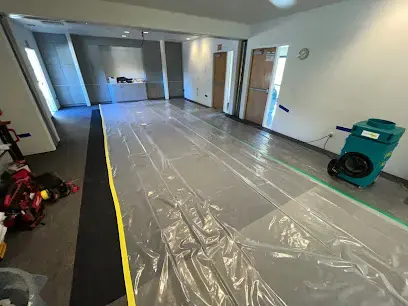
Fans and LGR units are sized room by room, with gentle airflow near old plaster and historic woodwork.
- 4
Read and verify
Readings are logged daily, and equipment leaves only once materials match a dry reference reading from elsewhere in the building.
Equipment behind a Jacksonville dry-out
- Truck-mounted extractionlifts water out of the building and discharges it outdoors
- Air moversset room by room to the speed each material dries
- LGR and desiccant dehumidifierspull moisture from air trapped in thick walls
- Thermal imaging and moisture metersfind water hiding inside walls and under floors
- Containment and HEPA scrubberskeep sewage and creek water from spreading
All water damage categories covered in Jacksonville, OR
Clean, gray or black water each gets its own plan.
A split supply pipe, a leaking tank or a popped hose. The water starts clean, so many materials can be dried where they stand.
Washing machine discharge, a dishwasher overflow, or rain driven through a roof or wall. Carpet pad usually goes, and hard surfaces are cleaned and dried.
Sewage from an overflowing sewer, or water that came out of Jackson Creek or Daisy Creek. Absorbent materials it reached are removed rather than dried.
Sewer backup cleanupWhat will water damage restoration cost in Jacksonville, OR?
In Jacksonville, OR, water damage restoration generally runs from $600 up to $10,000 or more. A small pipe leak found quickly sits near the bottom; creek water, a sewer overflow or soaked plaster across several rooms sits near the top.
- One room, clean water$600 to $2,500
- A room or two
- Most materials stay
- Short equipment stay
- Water in walls or floors$2,500 to $6,000
- Wet plaster or flooring opened
- Cavities dried
- Daily readings
- Sewer, creek water, large loss$6,000 to $10,000+
- Category 3 handling
- Containment in place
- Porous materials removed
What moves the price: water category · building size · wall materials · speed of response
Use the drying time estimator for a timeline or the water damage cost calculator for a budget range.
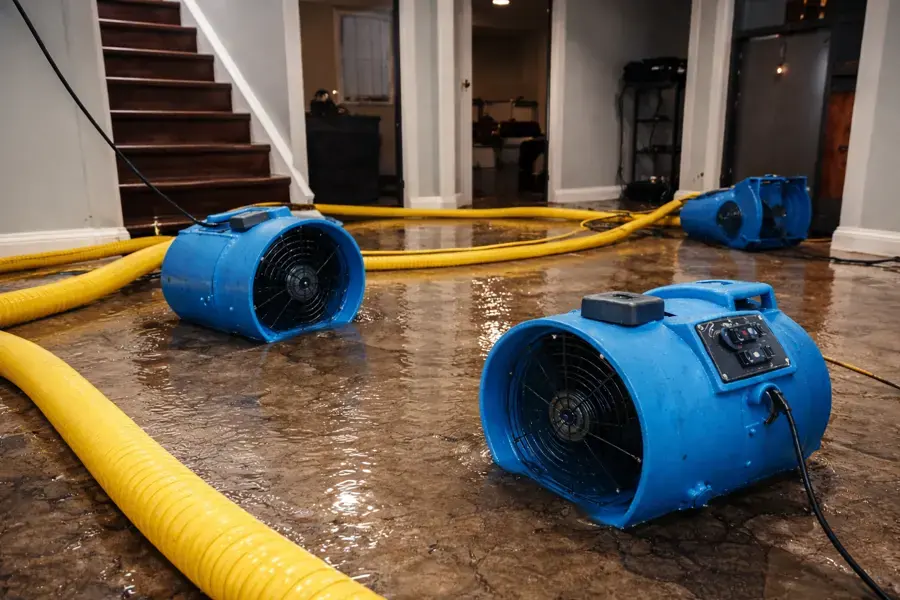
Inside a Jacksonville water damage dry-out, photo by photo
Jacksonville water damage pros, ready around the clock
Jacksonville water damage pros work throughout ZIP 97530, from the Historic District and the streets around California Street and Oregon Street to Pheasant Meadows, the Woodlands hillside and Britt Gardens. Crews also reach Royal Mobile Estates, the Third Street area and Oregon Highway 238.
ZIP code
Jacksonville areas
Nearby towns covered
Why water finds Jacksonville buildings: the local risk picture
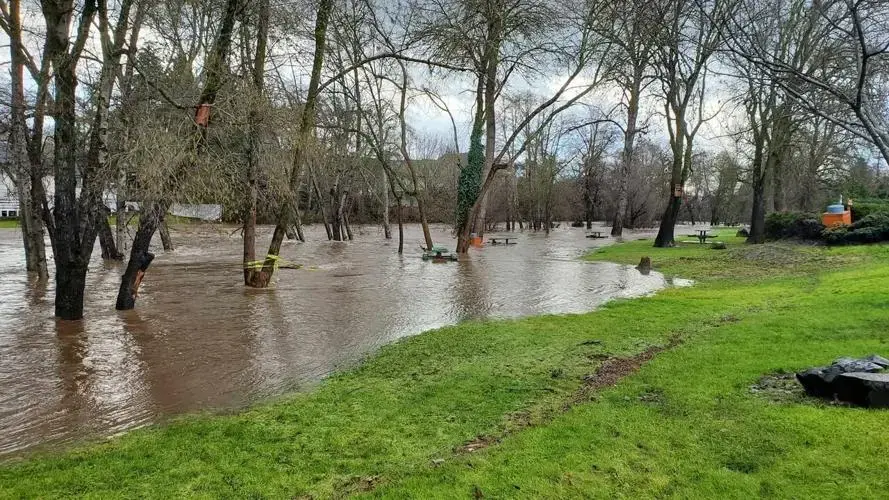
Jacksonville sits on an alluvial fan at the western edge of the Bear Creek Valley, at the base of Miller Mountain, between 1,400 and 1,600 feet. Its 1,651 housing units mix 1850s buildings with later homes, and Jackson Creek and Daisy Creek are the main flood sources.
- Fall and winter rain. About 21 inches falls in a year, mostly in fall and winter, loading roofs, gutters and storm drains.
- Snow plus warm rain. Flooding usually follows heavy snowfall met by sudden warm rain, with Jackson Creek and Daisy Creek the main sources.
- Freezing nights. December and January lows average near 30 degrees F, with ice and closed roads in winter storms.
- Old masonry. Most of downtown is unreinforced masonry with shared walls, from buildings put up in the 1850s through the 1880s.
- Park homes. Royal Mobile Estates has 155 manufactured home sites built in 1968, where leaks and freezes reach floors.
Does Jacksonville get its own plan, apart from Grants Pass?
Yes. Jacksonville, ZIP 97530, has its own approach built around the Historic District and hillside streets, using the same extraction, drying and records as water damage restoration in Grants Pass.
Where should I start when water floods a Jacksonville room?
Stop the water at the main valve, flip the breakers for wet rooms from a dry spot, and photograph everything before moving it. City of Jacksonville Public Works maintains the water system, and the shutoff where the pipe enters stops the flow.
Why do Jackson Creek and Daisy Creek matter for water damage?
They are the two main flood sources in Jacksonville, and flooding usually follows heavy snow met by warm rain. Creek water is Category 3, so flood water cleanup in Jacksonville removes porous materials it reached instead of drying them.
Can a building flood outside the mapped flood zone?
Yes. Parts of town sit in mapped FEMA flood zones, but areas outside them can still flood from small unmapped streams and local storm drainage. The city also adopted flood Ordinance 610.
How many days does a Jacksonville dry-out take?
Most contained losses finish in about three to five days. Thick masonry, plaster and water under a floor run longer, and structural drying in Jacksonville holds equipment in place until readings come close to a dry reference.
How is old masonry in the Historic District dried?
Most downtown buildings are unreinforced masonry with shared walls, and many were not built to current codes. Drying runs slower and gentler, with moisture mapped first so wet and dry walls are never confused.
How do manufactured homes dry out?
Leaks soak belly insulation and swell the decking quickly. The crew opens the belly as needed, removes wet insulation and dries the floor structure. Details are in manufactured home water damage in Jacksonville.
Who handles a sewer backup in Jacksonville?
Rogue Valley Sewer Services runs the public sewer collection system, and it can overflow during floods. Inside a building any backup is Category 3, which sewage backup cleanup in Jacksonville contains, removes and disinfects before drying.
Do Jacksonville winters freeze pipes?
They can. Lows average near 30 degrees F in December and January, and storms peak between November and March. Run the pipe freeze risk check to rate a building in about a minute.
Does insurance pay for water damage in Jacksonville?
Water from a burst pipe is frequently covered, while creek water typically calls for flood coverage and a sewer backup may need an added endorsement. Every policy reads differently, so confirm details with your insurer.
Water in your Jacksonville building? Call now.
Pumps clear the water first, then the drying team works the structure back to a verified dry reading.
(888) 373-8814Begin the Jacksonville dry-out now