Water Extraction in Grants Pass, OR
Every hour standing water sits, it wicks further into pad, subfloor and drywall. The extraction crew pulls it out with truck-mounted and portable units, then the drying team maps what is still wet.
(888) 373-8814Water on the floor? Start Grants Pass extraction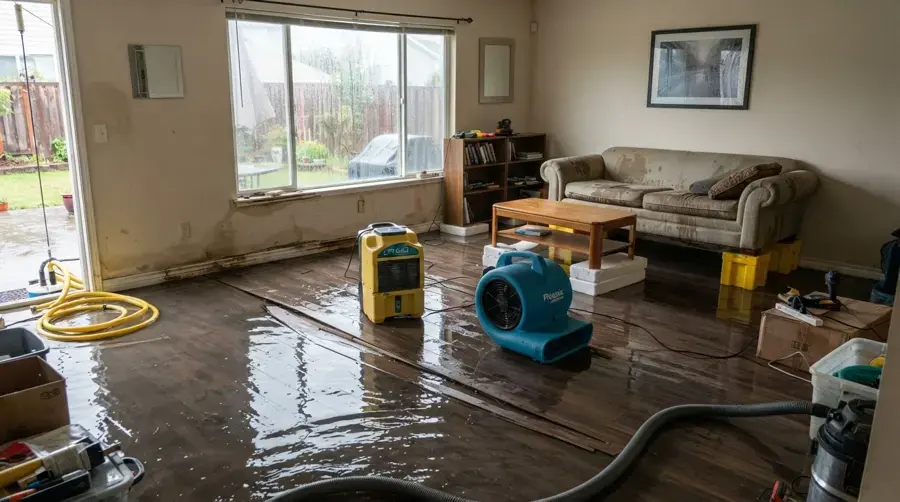
What to do while water is still on the floor
Do now
- 1Stop the source. Close the main shutoff or the fixture valve, and turn off the water heater if a hot water pipe failed
- 2Cut power to wet rooms. Switch off breakers for wet rooms only if the panel sits in a dry spot
- 3Move what you can. Lift rugs, electronics and paper goods, and set foil under furniture legs
- 4Photograph everything. Shoot each wet room and how high the water reached before anything moves
Hold off
- Running a household vacuum on standing water
- Walking through water near outlets or cords
- Turning the furnace up to dry the house
How water extraction is handled by the Grants Pass restoration crew
Extraction sets up everything that follows. Water left in pad or subfloor adds days of drying and pushes the job toward tear-out.
Rapid local response
The response team works day and night across Grants Pass and the Rogue Valley, weekends and storm nights included, and treats active water as urgent.
IICRC S500 drying standard
The drying team works to the industry drying standard and pulls equipment only when readings say dry, not when a surface looks dry.
Claim-ready documentation
Moisture maps, daily readings and timestamped photos go into a drying log that an adjuster, a landlord and the owner can all read.
Rogue Valley water experts
Crawl spaces, manufactured homes, wells, septic systems and old galvanized pipe are everyday work, so the crew checks under the floor, not just the wet room.
What does water extraction cost in Grants Pass, OR?
In Grants Pass, OR, water extraction typically runs $400 to $3,500 for the pump-out and the first drying setup. A clean-water leak in one room sits at the low end; several rooms, deep water or Category 3 water sits at the high end.
- One room, clean water$400 to $1,200
- Extraction
- Pad check
- Meters and logs
- Several rooms$1,200 to $2,500
- Truck-mounted unit
- Pad removal
- Air movers set
- Deep or Category 3$2,500 to $3,500+
- Submersible pumps
- Containment
- Porous materials out
The drivers are the water category, the square footage, the material class and how fast drying started. For a planning range, try the water damage cost calculator.
The water extraction process in Grants Pass
- 1
Walkthrough and moisture map
The tech who does the walkthrough finds the source, sets the water category and maps wet materials with meters and thermal imaging.
- 2
Extraction
The extraction crew pulls standing water with truck-mounted suction and weighted wands that press water out of carpet and pad.
- 3
Removal where needed
Pad, swollen baseboard and anything touched by Category 3 water come out so the structure underneath can dry.
- 4
Drying set and logged
Air movers and LGR dehumidifiers go in, and the drying team logs readings daily until materials meet the drying goal.
Water extraction in Grants Pass is the first and cheapest part of any water loss. The faster the extraction crew removes standing water, the less of it soaks into carpet pad, subfloor, baseboard and the bottom of the drywall, and the shorter the drying that follows.
Why extraction comes before any fan
Air movers dry by evaporation, and evaporating standing water takes days and fills the house with humidity. Extraction removes the bulk of it in hours. A truck-mounted unit sits outside and sends the water out of the building through a hose, so nothing is carried room to room in buckets. Weighted extraction wands then press water out of carpet and pad that a surface pass leaves behind.
- Truck-mounted extraction for whole rooms and deep water.
- Portable units for upstairs rooms, apartments and tight spaces.
- Submersible pumps when water stands inches deep in a crawl space or garage.
Water under Grants Pass floors
Many Grants Pass homes, from early 1900s bungalows near downtown to 1960s ranches north of the river, sit over a crawl space instead of a slab. Water on the floor above often runs through seams and heat registers to the vapor barrier below. The extraction crew checks the crawl space on every job, because water left under the house keeps the subfloor wet long after the carpet looks dry. See crawl space water damage for how that part is handled.
The EPA flooded homes cleanup page explains why porous materials touched by flood water are removed rather than dried.
When carpet can stay and when it goes
Carpet wet with clean water and extracted early can often be dried in place, while the pad under it usually comes out because it holds water like a sponge. Carpet touched by a toilet overflow, a sewer backup or river water is Category 3 and is removed. Hardwood and laminate need special floor drying mats, and manufactured-home particleboard decking that swelled is usually cut out. The structural drying page covers what happens once extraction is done.
Winter storms in the Rogue Valley can keep outdoor air damp for weeks, which is one more reason the drying team relies on dehumidifiers and readings instead of open windows. The National Weather Service Medford office posts the forecast for storm periods.
Where water extraction is handled around Grants Pass
The Grants Pass restoration crew works ZIP codes 97526, 97527 and 97528, from downtown under the arch and North Grants Pass to Redwood, Fruitdale and New Hope, plus Merlin, Murphy and Wilderville nearby.
See every area coveredRelated water damage services in Grants Pass
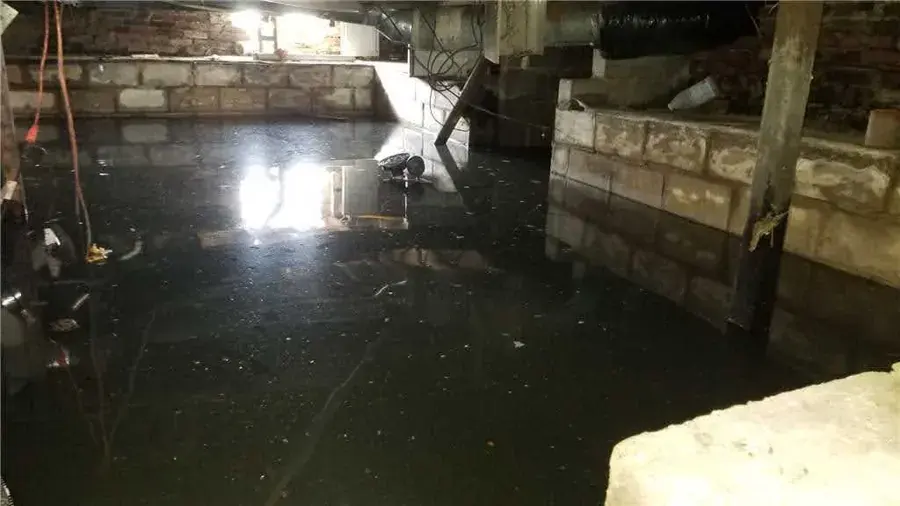 Crawl Space Water DamageWater under the house pumped out, wet insulation and vapor barrier removed, joists dried to a reading.View service
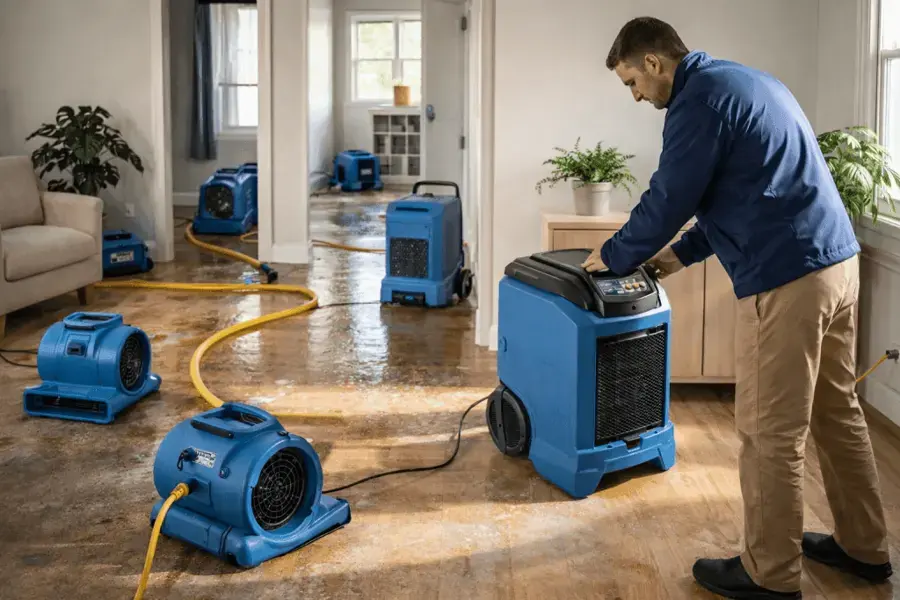 Structural DryingAir movers, LGR and desiccant dehumidifiers run until readings meet the drying goal.View service
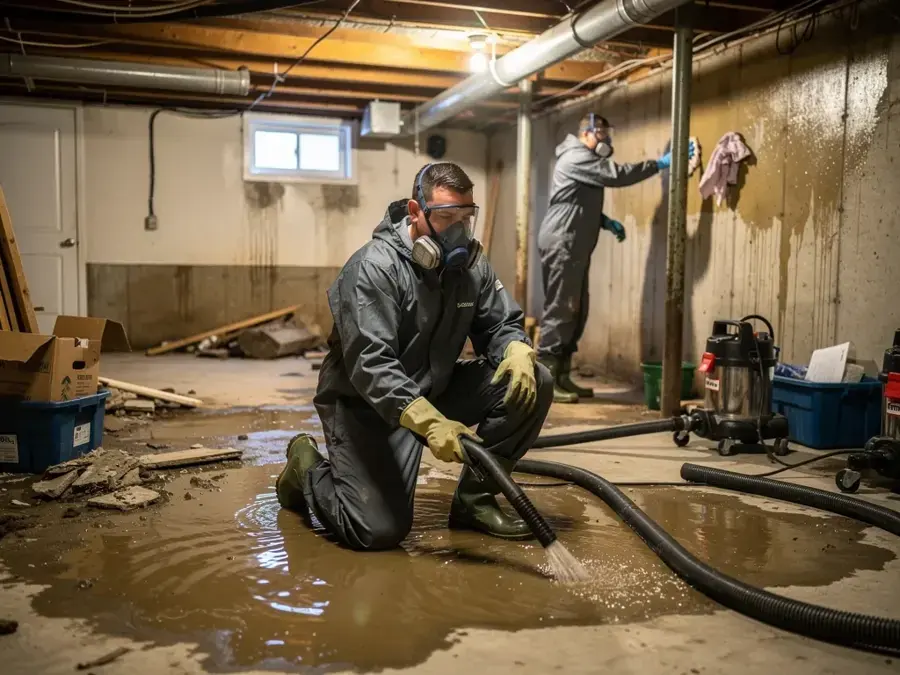 Flood Water CleanupRising water from the Rogue River or a town creek, handled as Category 3 from the first step.View service
How fast should water be extracted?
As soon as possible. Mold can start inside 24 to 48 hours, and every hour standing water sits it wicks further into pad, subfloor and drywall, so extraction is treated as urgent.
Can a shop vacuum do the job?
A shop vacuum helps with a small spill, but it cannot pull water out of carpet pad or subfloor. Truck-mounted units and weighted wands remove far more water before drying starts.
Does the carpet always have to be replaced?
No. Carpet wet with clean water and extracted early can often be dried in place. The pad usually comes out, and carpet touched by sewage or flood water is removed.
Why check the crawl space when the water was upstairs?
Water runs through floor seams and registers to the vapor barrier below. Water left under the house keeps the subfloor wet even after the room above looks dry.
What happens after extraction?
The drying team sets air movers and LGR dehumidifiers sized to each room and logs readings daily until materials meet the IICRC S500 drying goal.
Is water extraction covered by insurance?
Sudden and accidental water, such as a burst pipe, is commonly covered, while flood water usually needs separate flood coverage. Coverage depends on your policy, so it is worth checking with your own insurer.
Standing water in Grants Pass? Call now.
The extraction crew pulls the water, the drying team dries to the IICRC S500 goal, and every reading goes into your claim file.
(888) 373-8814Get the Grants Pass pump-out moving