Sewage Backup Cleanup in Grants Pass, OR
Sewage is Category 3 the moment it backs up, whether it comes from a city sewer lateral or a rural septic system. The restoration team contains the area, removes what it touched and disinfects before any drying.
(888) 373-8814Sewage coming up? Call for Grants Pass cleanup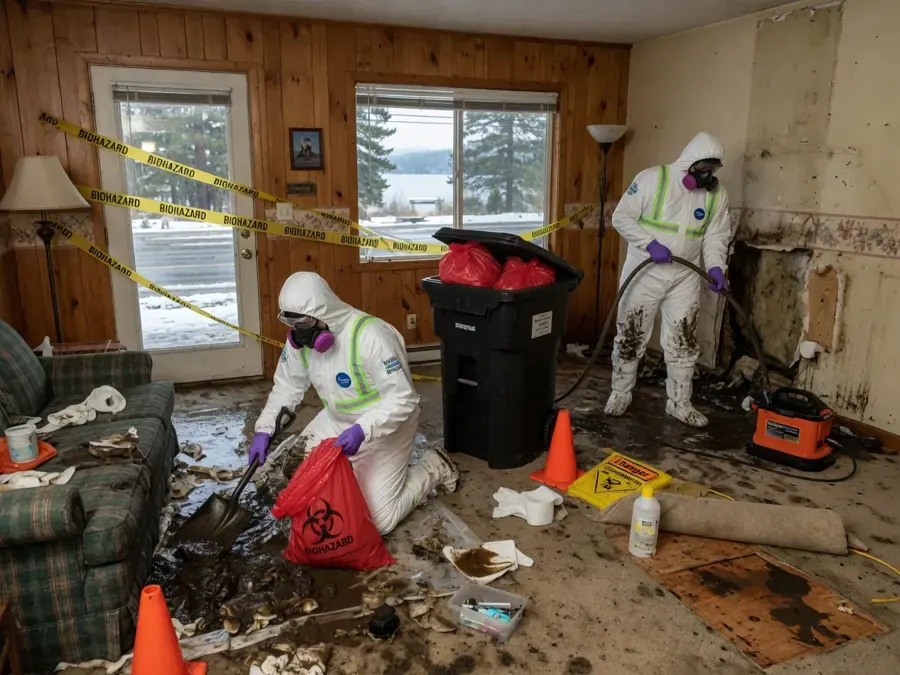
What to do when sewage backs up
Do now
- 1Stop using water. No flushing, showers, laundry or dishwasher until the drain is cleared
- 2Keep people out. Keep children and pets away and close the door to the area
- 3Cut nearby power. Switch off breakers for affected rooms if the panel is dry
- 4Photograph and call. Photograph the backup and the drain it came from, then call
Hold off
- Mopping sewage with household cleaners
- Running fans that spread contaminated air
- Keeping soaked carpet or drywall
How sewage backup cleanup is handled by the Grants Pass restoration crew
Sewage work is decontamination before drying. The order protects the people in the house and the crew doing the work.
Rapid local response
The response team works day and night across Grants Pass and the Rogue Valley, weekends and storm nights included, and treats active water as urgent.
IICRC S500 drying standard
The drying team works to the industry drying standard and pulls equipment only when readings say dry, not when a surface looks dry.
Claim-ready documentation
Moisture maps, daily readings and timestamped photos go into a drying log that an adjuster, a landlord and the owner can all read.
Rogue Valley water experts
Crawl spaces, manufactured homes, wells, septic systems and old galvanized pipe are everyday work, so the crew checks under the floor, not just the wet room.
What does sewage backup cleanup cost in Grants Pass, OR?
In Grants Pass, OR, sewage backup cleanup typically runs $1,500 to $10,000 or more, not counting the drain or septic repair. A small backup at one fixture sits at the low end; sewage across several rooms or into the crawl space sits at the high end.
- One fixture, small area$1,500 to $3,500
- Containment
- Removal
- Antimicrobial
- Several rooms$3,500 to $7,000
- Flood cuts
- Flooring out
- HEPA scrubbers
- Into the crawl space$7,000 to $10,000+
- Crawl space clean-out
- Insulation out
- Structural drying
The drivers are the water category, the square footage, the material class and how fast drying started. For a planning range, try the water damage cost calculator.
The sewage backup cleanup process in Grants Pass
- 1
Contain
Poly sheeting and negative air with HEPA air scrubbers keep contaminated air out of the rest of the house.
- 2
Extract and remove
The extraction crew pulls the sewage; carpet, pad, drywall and insulation it touched are bagged and removed.
- 3
Clean and treat
Hard surfaces are cleaned and an EPA-registered antimicrobial is applied at its labeled dwell time.
- 4
Dry and verify
The drying team dries the structure, logs readings to the drying goal and documents every step for the claim file.
Sewage backup cleanup in Grants Pass comes from two kinds of systems. Homes inside the city connect to the public sewer through a private lateral, and older clay or cast-iron laterals under mature trees let roots in until a blockage pushes sewage back up the lowest drain. Rural properties in Redwood, New Hope, Merlin, Murphy and the rest of the county rely on septic systems, which back up when a tank is full, a drainfield is saturated in a wet winter, or a pump fails.
Sewage is Category 3 the moment it happens
The IICRC S500 treats sewage as Category 3 water because it carries bacteria, viruses and parasites. That sets the rules for the job:
- The area is contained, with HEPA air scrubbers running.
- Porous materials it touched, such as carpet, pad, drywall and insulation, are removed, not dried.
- Hard surfaces are cleaned and treated with an EPA-registered antimicrobial at its dwell time.
- Workers wear respirators, gloves, suits and boots.
Septic backups in a wet winter
During long atmospheric-river storms, drainfields in the Rogue Valley can saturate, and a septic system that works all summer may push water back into the house. A septic professional pumps and checks the system while the restoration team handles the cleanup inside. The Oregon DEQ onsite septic program and the EPA septic systems page explain how to care for a system after a backup.
When it reaches the crawl space
In homes on raised foundations, sewage often leaks into the crawl space below the bathroom or laundry. Contaminated soil surface, vapor barrier and insulation come out, the area is treated, and the framing is dried. See crawl space water damage for that part of the work, and flood water cleanup when river water is the source.
Where sewage backup cleanup is handled around Grants Pass
The Grants Pass restoration crew works ZIP codes 97526, 97527 and 97528, from downtown under the arch and North Grants Pass to Redwood, Fruitdale and New Hope, plus Merlin, Murphy and Wilderville nearby.
See every area coveredRelated water damage services in Grants Pass
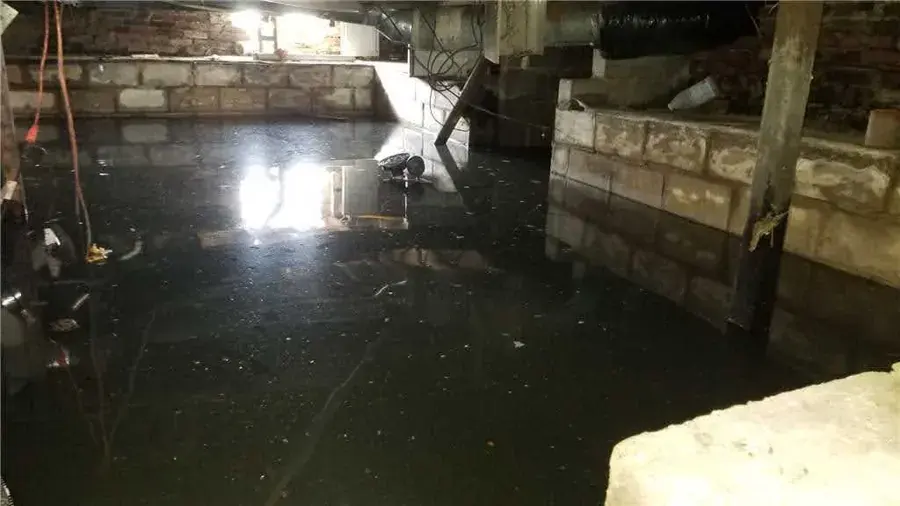 Crawl Space Water DamageWater under the house pumped out, wet insulation and vapor barrier removed, joists dried to a reading.View service
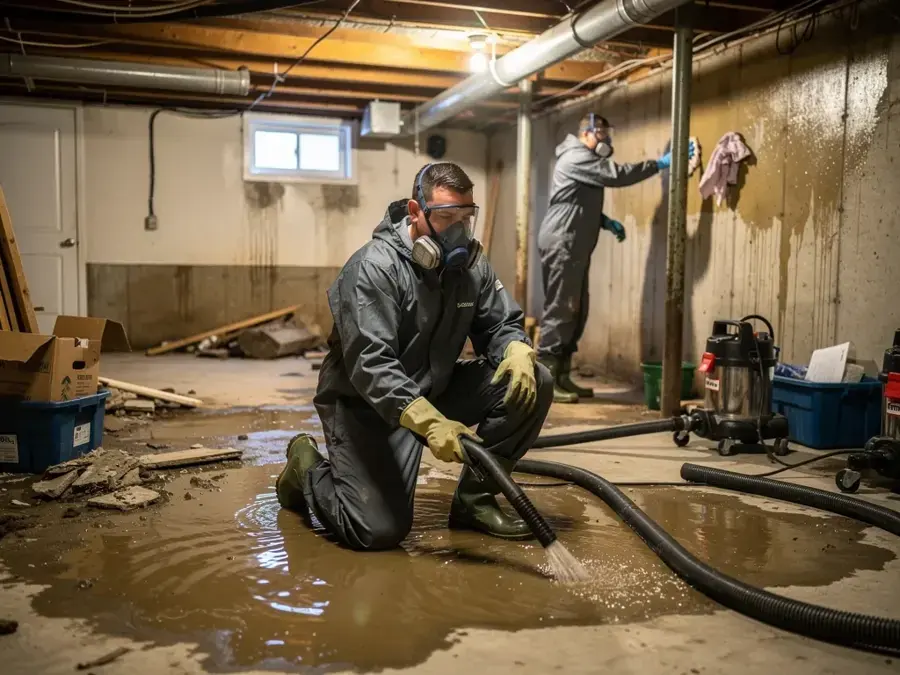 Flood Water CleanupRising water from the Rogue River or a town creek, handled as Category 3 from the first step.View service
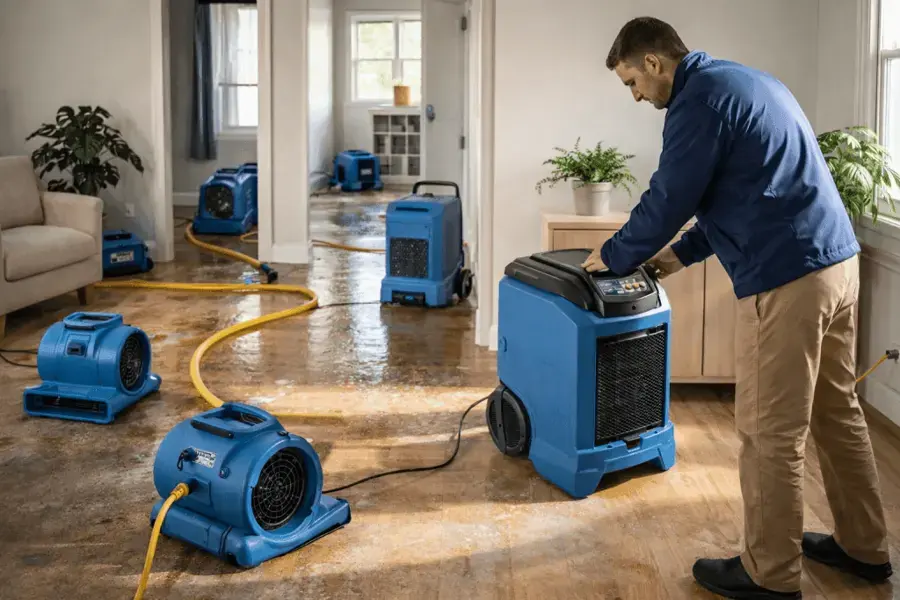 Structural DryingAir movers, LGR and desiccant dehumidifiers run until readings meet the drying goal.View service
Why can't sewage-soaked carpet be cleaned and kept?
Sewage is Category 3 water. Porous materials it touched hold bacteria deep in the fibers, so the IICRC S500 calls for removing them rather than drying them.
What causes sewer backups in Grants Pass?
In town, tree roots in older clay or cast-iron laterals cause most blockages. On rural lots, a full tank, a saturated drainfield or a failed pump backs up the septic system.
Is it safe to stay in the house?
Keep everyone, especially children and pets, out of the affected area. If the backup is large or the only bathroom is affected, staying elsewhere is often easier.
Who fixes the drain or the septic system?
A plumber clears or repairs the sewer lateral, and a septic professional pumps or repairs the septic system. The restoration team handles the cleanup and drying inside.
Does insurance cover sewage backup?
Many homeowners policies cover sewer backup only with a specific endorsement. Coverage depends on your policy, so it is worth checking with your own insurer.
How long does sewage cleanup take?
Containment, removal and treatment usually take one to two days, then drying runs three to five days or more. Readings decide when equipment comes out.
Sewage backup in Grants Pass? Call now.
The restoration team contains it, removes what it touched, disinfects and dries to a verified reading.
(888) 373-8814Get the sewage cleanup started