Flood Water Cleanup in Grants Pass, OR
When the Rogue or Gilbert, Allen or Fruitdale Creek comes up, the water that gets inside is Category 3. The restoration team mucks out, removes what it touched and dries the structure behind it.
(888) 373-8814River water inside? Start the Grants Pass cleanup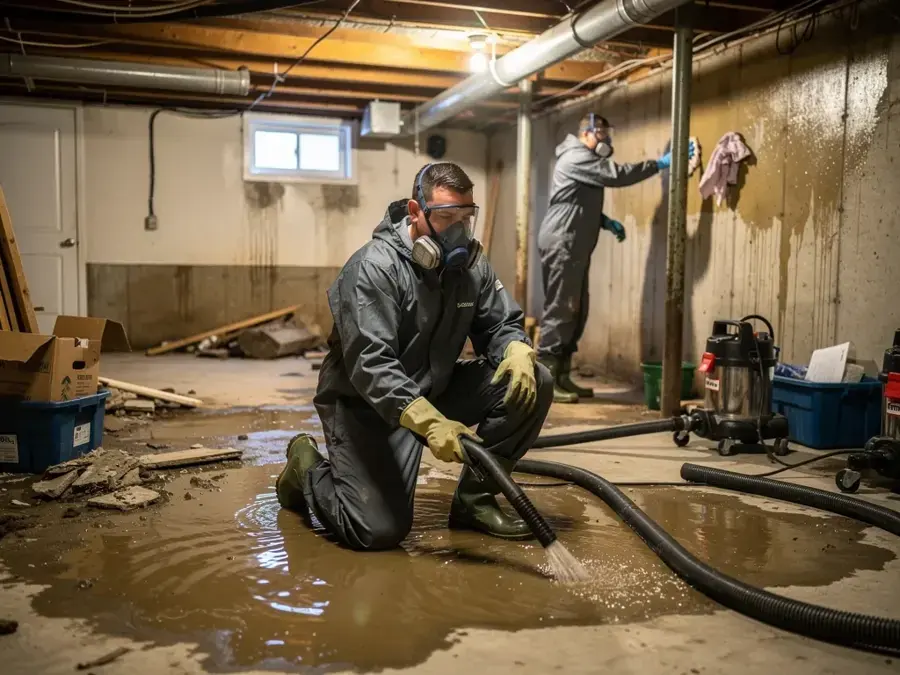
What to do when flood water has been inside
Do now
- 1Wait for the all clear. Go back in only after officials say it is safe and the water has dropped
- 2Keep the power off. Leave the main breaker off until an electrician checks anything that was under water
- 3Gear up. Wear rubber boots and gloves; flood water carries sewage, fuel and chemicals
- 4Document first. Photograph the high-water mark on every wall before cleaning anything
Hold off
- Letting children or pets into flood-soaked rooms
- Running a generator indoors or in the garage
- Bleaching and keeping soaked drywall
How flood water cleanup is handled by the Grants Pass restoration crew
Flood work is decontamination first and drying second. Nothing touched by river water is simply dried and left in place.
Rapid local response
The response team works day and night across Grants Pass and the Rogue Valley, weekends and storm nights included, and treats active water as urgent.
IICRC S500 drying standard
The drying team works to the industry drying standard and pulls equipment only when readings say dry, not when a surface looks dry.
Claim-ready documentation
Moisture maps, daily readings and timestamped photos go into a drying log that an adjuster, a landlord and the owner can all read.
Rogue Valley water experts
Crawl spaces, manufactured homes, wells, septic systems and old galvanized pipe are everyday work, so the crew checks under the floor, not just the wet room.
What does flood water cleanup cost in Grants Pass, OR?
In Grants Pass, OR, flood water cleanup typically runs $3,000 to $25,000 or more. A garage or crawl space that took on a few inches sits at the low end; a home with water over the floor and up the walls sits at the high end.
- Garage or crawl space$3,000 to $7,000
- Pump-out
- Mud-out
- Antimicrobial
- Water over the floor$7,000 to $15,000
- Flood cuts
- Carpet and pad out
- Structural drying
- Deep water, whole level$15,000 to $25,000+
- Gut to studs
- Containment
- Weeks of drying
The drivers are the water category, the square footage, the material class and how fast drying started. For a planning range, try the water damage cost calculator.
The flood water cleanup process in Grants Pass
- 1
Pump and mud-out
The extraction crew pumps remaining water and shovels out silt so the floor can be cleaned and inspected.
- 2
Flood cuts and removal
Drywall and insulation are cut above the high-water mark, and carpet, pad and soaked cabinets come out.
- 3
Clean and treat
Surfaces are washed, then an EPA-registered antimicrobial goes on at its labeled dwell time with HEPA air scrubbers running.
- 4
Dry and verify
LGR and desiccant dehumidifiers dry studs, plates and subfloor, with readings logged until the drying goal is met.
Flood water cleanup in Grants Pass follows a different set of rules from a pipe leak. The Rogue River runs along the south edge of downtown, and creeks such as Gilbert Creek, Allen Creek, Fruitdale Creek and Jones Creek drain the neighborhoods toward it. When a long winter storm stalls over the Siskiyous, those waters rise, and whatever gets inside a building carries soil, sewage and road runoff with it.
The floods Grants Pass remembers
The December 1964 Christmas flood and the New Year's Day flood of 1997 both put the Rogue far over its banks, and smaller high-water events come with many strong atmospheric-river storms. The USGS gauge for the Rogue River at Grants Pass shows the river level in real time, and FEMA flood maps show which lots sit in a mapped flood zone.
Why flood water is always Category 3
The IICRC S500 treats rising river and surface water as Category 3, the same as sewage. That decides most of the job:
- Porous materials it touched, such as drywall, insulation, carpet and pad, are removed, not dried.
- Drywall is cut a set distance above the high-water mark so wicked water goes with it.
- Hard surfaces are cleaned and treated with an EPA-registered antimicrobial.
- HEPA air scrubbers run while materials come out.
The Ready.gov flood safety page covers what to do before you go back inside.
Drying after the mud-out
Once the building is clean, the drying is structural: studs, plates, subfloor and the crawl space underneath. Many homes near the river sit over crawl spaces that filled to the joists, so crawl space drying is part of most flood jobs. The drying team logs readings until the framing meets the drying goal, and that log, with the timestamped photos, goes into the claim file. Flood damage is usually a separate policy from homeowners coverage, so see storm water damage for rain that comes in through the roof or walls instead.
Where flood water cleanup is handled around Grants Pass
The Grants Pass restoration crew works ZIP codes 97526, 97527 and 97528, from downtown under the arch and North Grants Pass to Redwood, Fruitdale and New Hope, plus Merlin, Murphy and Wilderville nearby.
See every area coveredRelated water damage services in Grants Pass
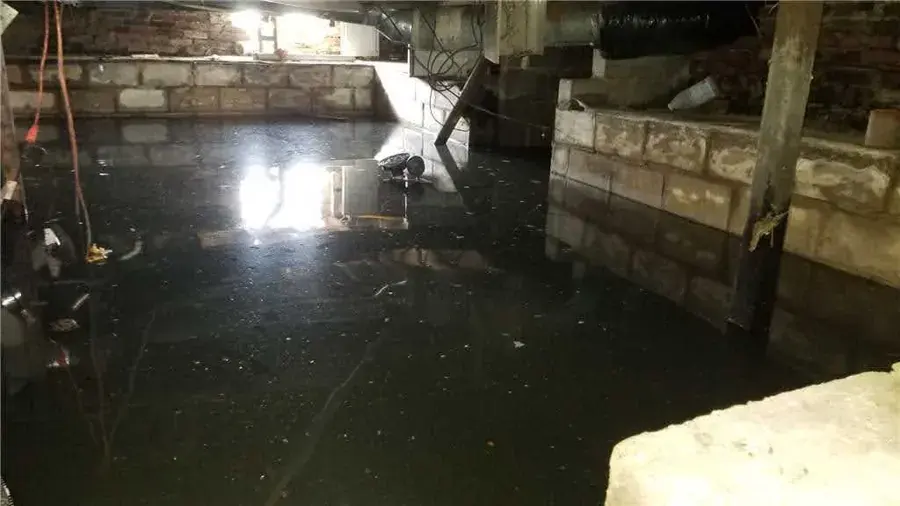 Crawl Space Water DamageWater under the house pumped out, wet insulation and vapor barrier removed, joists dried to a reading.View service
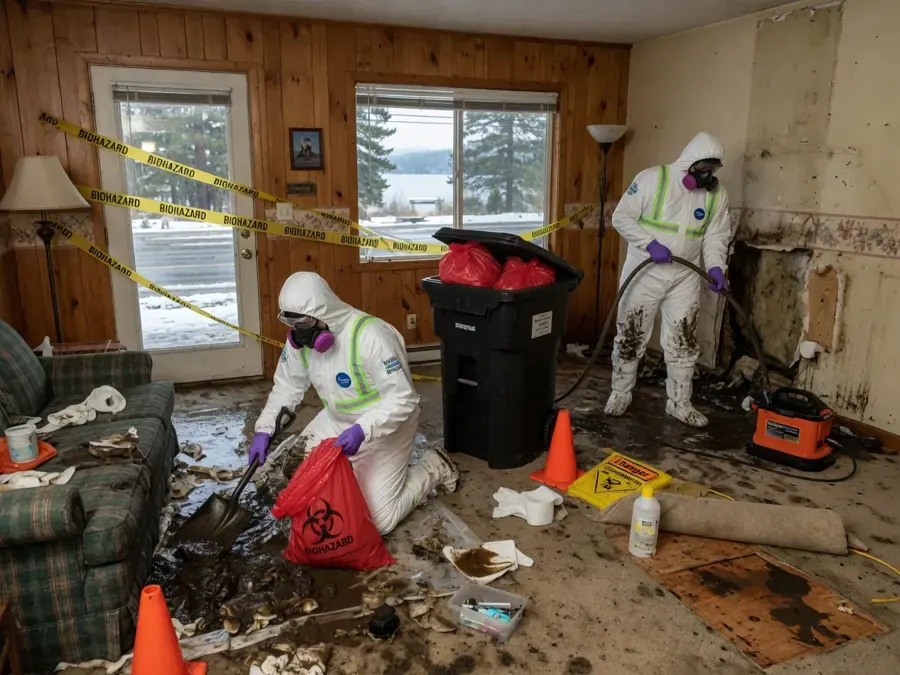 Sewage Backup CleanupCity sewer and rural septic backups, contained and removed as Category 3.View service
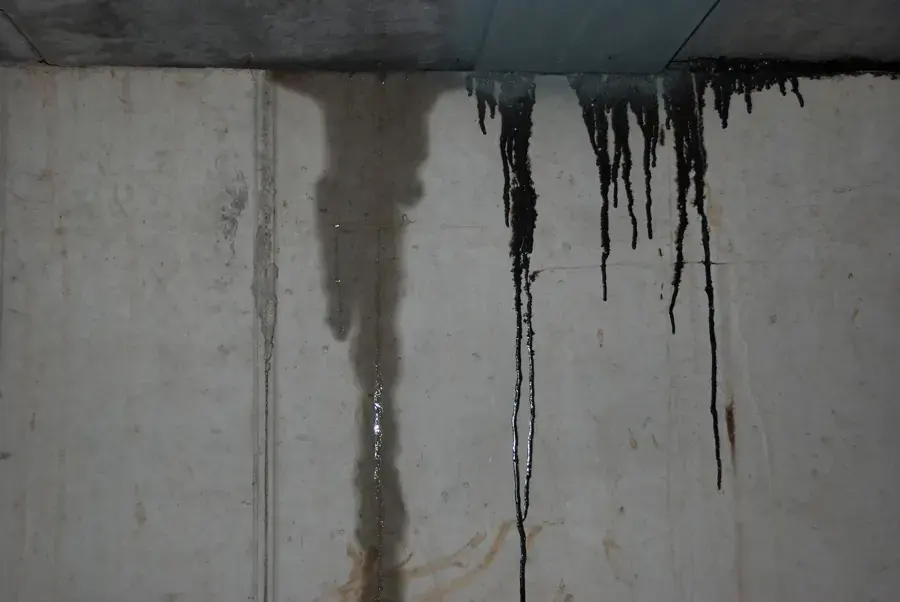 Storm Water DamageAtmospheric-river rain driven through siding, windows, doors and crawl vents.View service
Is flood water really as bad as sewage?
Yes. The IICRC S500 treats rising river and surface water as Category 3 because it carries sewage, soil, fuel and chemicals. Porous materials it touched are removed.
How high do the drywall cuts go?
Usually a set distance above the highest water mark, so wicked water goes with the cut. The tech checks with meters before marking the cut.
Can furniture and belongings be saved?
Hard items such as metal and glass can often be cleaned. Upholstered furniture, mattresses and paper goods soaked by flood water are usually discarded.
Does homeowners insurance cover river flooding?
Standard homeowners policies usually exclude flood, which is covered by a separate flood policy. Coverage depends on your policy, so it is worth checking with your own insurer.
How long does a flooded house take to dry?
Once the mud-out and removal are done, drying usually takes five to ten days, longer for crawl spaces and dense materials. Readings decide when equipment comes out.
What is the first call to make after a flood?
Call the restoration team once officials say it is safe to go back in. Photograph the high-water marks before anything moves, then call your insurer.
River or creek water in your Grants Pass home? Call now.
The restoration team handles flood water as Category 3: mud-out, removal, antimicrobial and drying to a verified reading.
(888) 373-8814Get the Grants Pass flood cleanup started