Roof Leak Water Damage in Jacksonville, OR
Ice and wind storms have blown trees down in Jacksonville, and winter rain tests every older roof, including those in the historic core. When water gets in, the restoration team dries the attic, the ceiling and the walls below it.
(888) 373-8814Water coming through the roof? Call now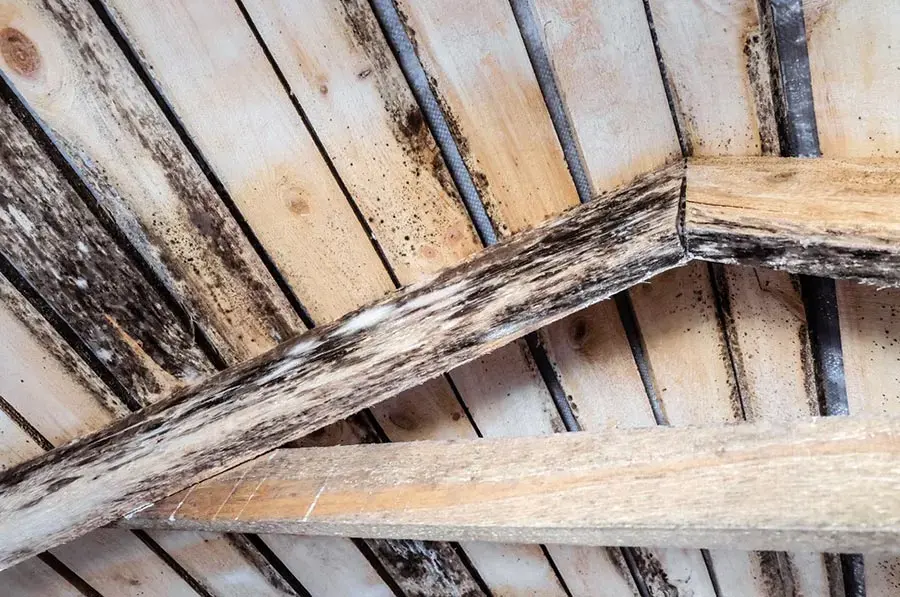
First steps when a roof leaks into a Jacksonville home
Do now
- 1Catch and contain. Set buckets under drips, move furniture away and clear the floor below any sagging ceiling
- 2Turn off ceiling lights. Switch off breakers for lights and fans on a wet ceiling, from a dry floor, before water reaches a fixture
- 3Photograph the stain. Capture the ceiling, the walls and any attic view that is safe, before the area is touched
- 4Tarp, then call. Ask a roofer to cover the opening if the storm allows, then phone with the rooms below that are affected
Hold off
- Climbing onto a wet or icy roof
- Standing under a bulging ceiling
- Hiding the stain with paint
How roof leak water damage is handled by the Jacksonville restoration crew
A roof leak soaks the attic first and the ceiling second. Drying follows the water down through each layer.
Rapid local response
The response team works day and night across Jacksonville and the Rogue Valley, weekends and storm nights included, and treats active water as urgent.
IICRC S500 drying standard
The drying team works to the industry drying standard and pulls equipment only when readings say dry, not when a surface looks dry.
Claim-ready documentation
Moisture maps, daily readings and timestamped photos go into a drying log that an adjuster, a landlord and the owner can all read.
Rogue Valley water experts
Crawl spaces, manufactured homes, wells, septic systems and old galvanized pipe are everyday work, so the crew checks under the floor, not just the wet room.
What does roof leak water damage cost in Jacksonville, OR?
In Jacksonville, OR, drying after a roof leak typically runs $800 to $5,500, not counting the roof repair. A leak caught at the first stain sits low; soaked attic insulation and a fallen ceiling sit high.
- First stain$800 to $1,800
- Small area of insulation pulled
- Ceiling dried in place
- One dehumidifier
- Wet insulation$1,800 to $3,800
- Attic insulation removed
- Drywall opened
- Daily meter logs
- Ceiling down$3,800 to $5,500+
- Fallen ceiling cleared
- Walls below dried
- Extended drying
The drivers are the water category, the square footage, the material class and how fast drying started. For a planning range, try the water damage cost calculator.
The roof leak water damage process in Jacksonville
- 1
Trace the water
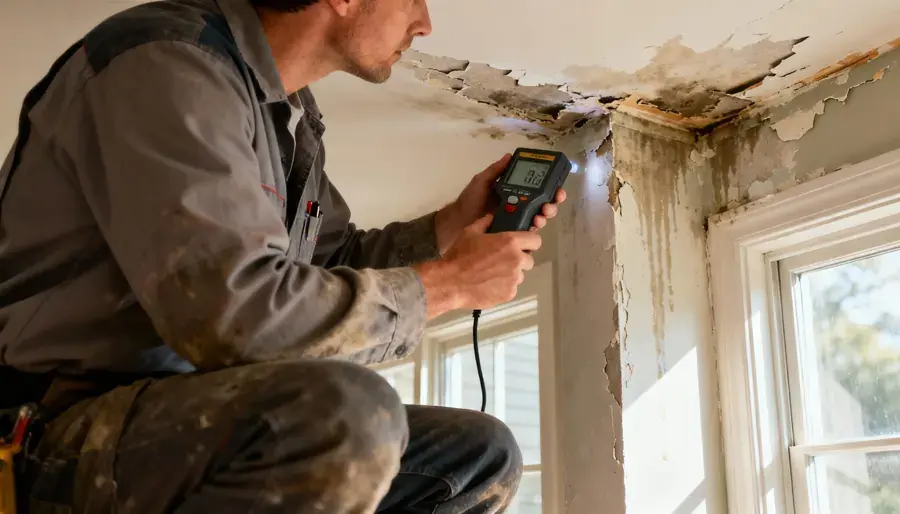
Thermal imaging and meters follow the leak from the roof opening through insulation and drywall to find every wet layer.
- 2
Remove what holds water
Soaked attic insulation and sagging ceiling drywall are cut out and bagged before they fall or go moldy.
- 3
Dry the layers
Air movers and dehumidifiers run in the attic and the rooms below on a daily meter log until readings are normal.
- 4
Hand off to the roofer
The entry point is photographed and noted for the repair, and the log goes into the claim file.
Jacksonville roofs take a real beating in winter. Strong winds and ice storms have blown down trees here, cutting power and blocking streets, and about 21 inches of rain falls each year, mostly in fall and winter. A roof that holds through summer can open at a seam or a damaged shingle after one hard storm. Snow adds another path: when heavy snowfall meets sudden warm rain, melt backs up behind ice and works under shingles in places that stay dry through an ordinary rain.
Old roofs over old buildings
The historic core has houses and commercial buildings from the 1850s through the 1880s, and about 37 percent of residential buildings townwide date before 1990. Older roofs have been patched and weathered for decades, and leaks often travel along rafters before they drip, so the stain on a ceiling can sit well away from the damaged spot. Tall ceilings and shared walls in older buildings add more surface for water to travel across before anyone sees it.
How far the water has traveled
- Attic insulation drinks water and holds it against the ceiling.
- Drywall or plaster ceilings sag as they fill.
- Wall tops and light fixtures collect the runoff.
- Water that runs down a wall wets the floor below.
The crew uses thermal imaging to find each wet layer before removing anything, and ceiling leak water damage in Jacksonville covers the ceiling surface and its repair.
After the storm
A roofer repairs the opening, and the drying team dries the structure. When wind and rain arrive together, storm water damage in Jacksonville covers the other places water gets in, and structural drying in Jacksonville explains how readings decide when the equipment leaves. Insulation and drywall are replaced only after the framing meters dry, and the photos of the entry point help the roofer and the adjuster talk about the same spot.
Where roof leak water damage is handled around Jacksonville
Jacksonville water damage pros work throughout ZIP 97530, from the Historic District and the streets around California Street and Oregon Street to Pheasant Meadows, the Woodlands hillside and Britt Gardens. Crews also reach Royal Mobile Estates, the Third Street area and Oregon Highway 238.
See every area coveredRelated water damage services in Jacksonville
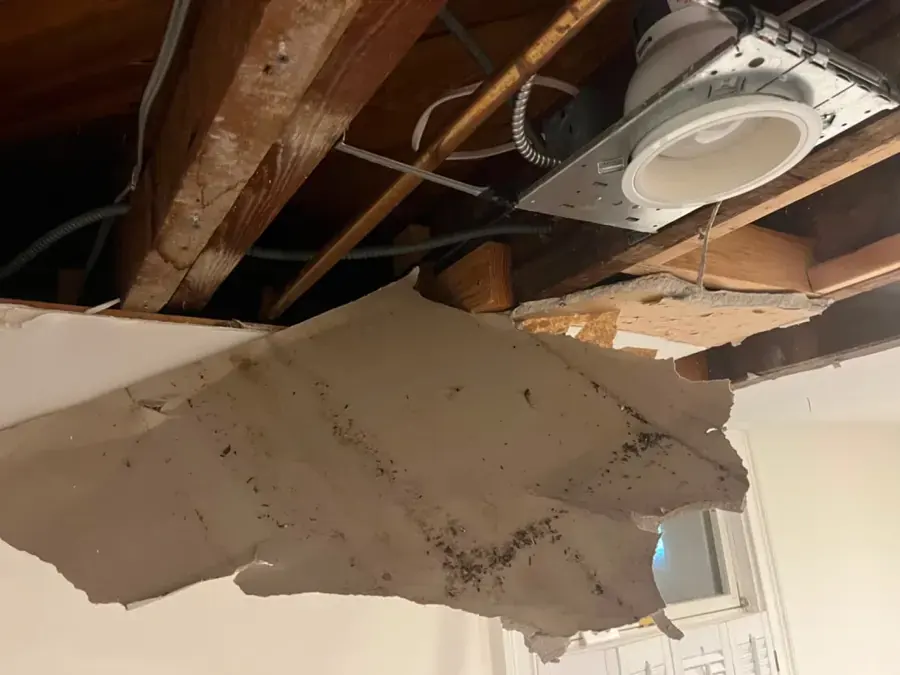 Ceiling Leak Water Damage in JacksonvilleA wet ceiling in an older building is opened and dried before drywall or plaster lets go.View service
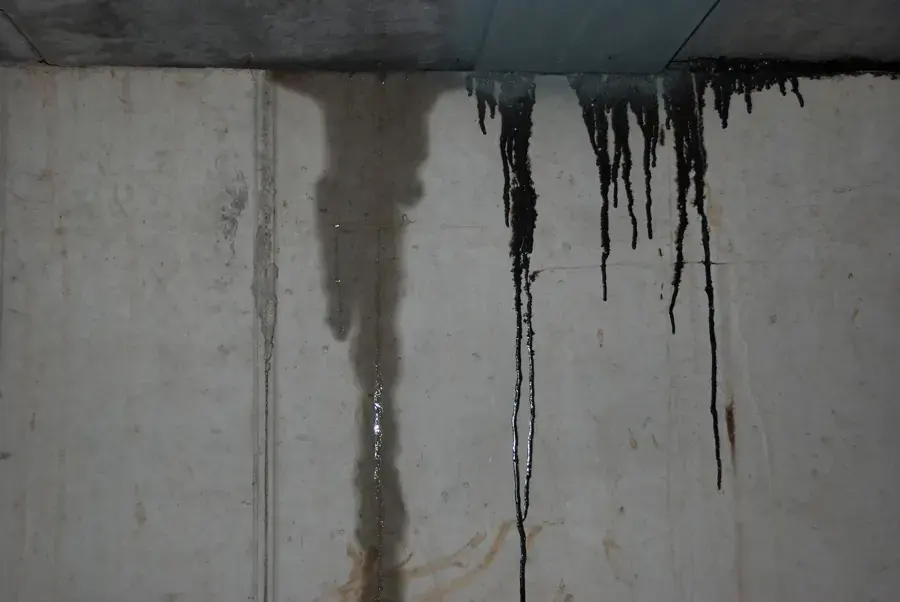 Storm Water Damage in JacksonvilleSnowmelt and warm rain pushed through roofs, windows and overloaded storm drainage.View service
 Structural Drying in JacksonvilleOld masonry, plaster and framing dried carefully, with readings logged against a clear goal.View service
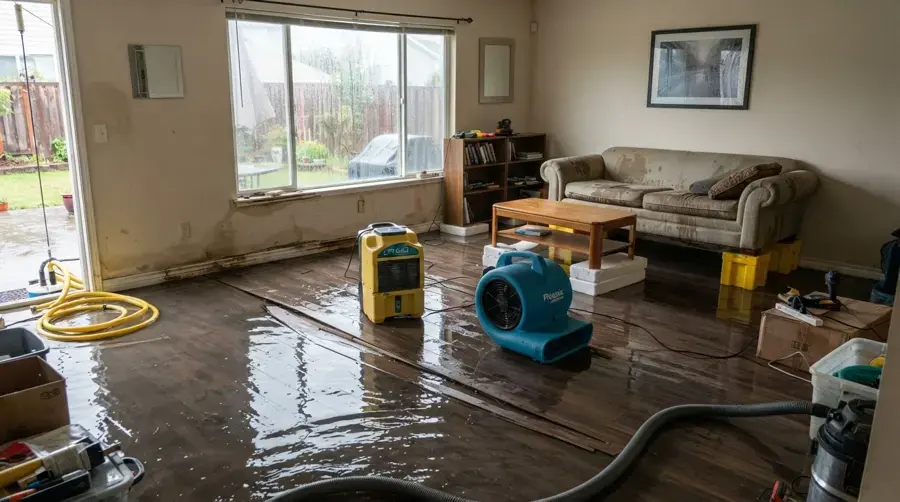 Water Extraction in JacksonvilleStorm rain, creek overflow or a failed pipe: standing water is pulled out before it wicks into plaster.View service
Roof Leak Water Damage in Grants PassFlashing, valley and vent leaks through the attic, dried before the ceiling sags.View service
 Water damage restoration in JacksonvilleAll fourteen services are tailored to Jacksonville's historic masonry, creek corridors, hillside streets and owner-occupied homes.View the town page
Why does the stain appear far from the hole?
Water runs along rafters and insulation before it drips, so the ceiling stain can sit well away from the roof opening. Thermal imaging traces the path before anything is cut. The photos help the roofer too.
Do Jacksonville storms damage roofs?
They can. Strong winter winds and ice storms have blown down trees in Jacksonville, and winter storms are most common from November through March, so seams and shingles are tested often.
Does attic insulation have to come out?
When it is soaked, yes. Wet insulation holds water against the ceiling and can take weeks to dry on its own, so the soaked sections are removed and dry material stays.
Is rain through a roof clean water?
Not quite. Rain that crosses roofing and attic materials picks up dust and debris, so it is treated as Category 2. Porous materials it soaks, such as pad and insulation, usually go.
How long does drying take after a roof leak?
Usually three to five days for a contained loss, and longer for thick plaster. The gear in structural drying in Jacksonville stays until readings match dry material.
Will insurance cover a roof leak?
Storm damage to a roof is often covered, while a worn roof may not be. Coverage depends on the policy, so check with your own insurer and keep photos of the roof, the stain and the readings.
Roof leak in Jacksonville? Call now.
The extraction crew removes the water, and the drying team dries the attic, ceiling and walls until readings return to normal.
(888) 373-8814Dry out the roof leak damage