Ceiling Leak Water Damage in Jacksonville, OR
Many Jacksonville buildings are older and not built to current codes, and winter storms can open roofs while pipes leak above ceilings. The restoration team traces the source, opens the wet ceiling and dries the layers around it.
(888) 373-8814Ceiling dripping or sagging? Call now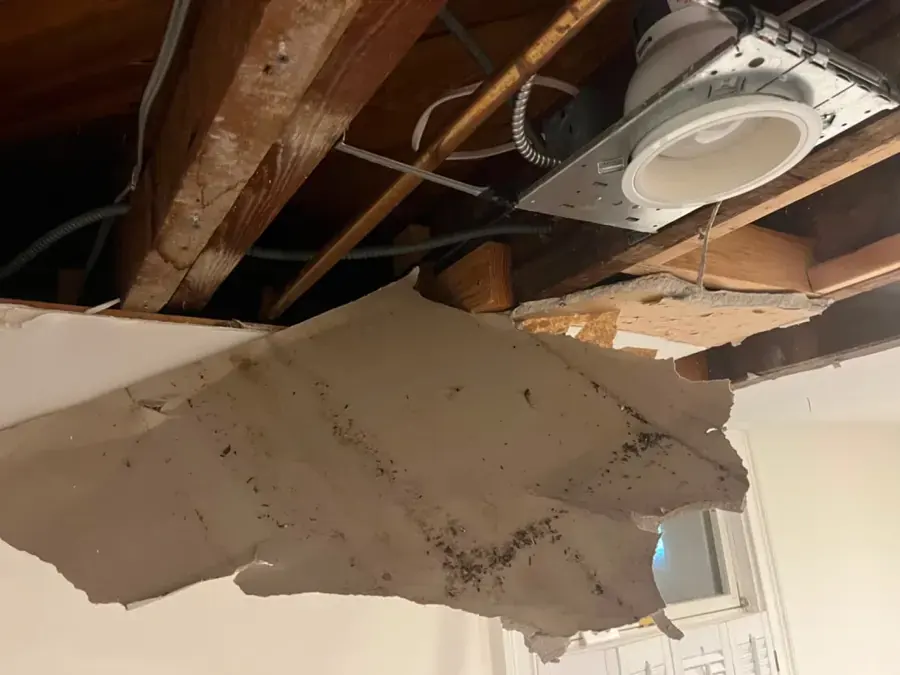
First steps when a ceiling leaks in a Jacksonville building
Do now
- 1Clear the floor. Move furniture and rugs from under the stain, and keep everyone out of the room below a bulge
- 2Cut ceiling circuits. Switch off lights and fan circuits for the wet ceiling at the breaker, standing on a dry floor
- 3Find the source. Check whether an upstairs bathroom, a roof or a pipe is feeding it, and shut the main if a pipe is involved
- 4Photograph and call. Capture the stain edges, then phone with the rooms above and below the leak
Hold off
- Poking a bulging ceiling without a bucket
- Switching on a wet light fixture
- Painting over a stain to cover it
How ceiling leak water damage is handled by the Jacksonville restoration crew
Ceiling water spreads three ways: up into the cavity, sideways along the joists and down the walls. Each path gets dried.
Rapid local response
The response team works day and night across Jacksonville and the Rogue Valley, weekends and storm nights included, and treats active water as urgent.
IICRC S500 drying standard
The drying team works to the industry drying standard and pulls equipment only when readings say dry, not when a surface looks dry.
Claim-ready documentation
Moisture maps, daily readings and timestamped photos go into a drying log that an adjuster, a landlord and the owner can all read.
Rogue Valley water experts
Crawl spaces, manufactured homes, wells, septic systems and old galvanized pipe are everyday work, so the crew checks under the floor, not just the wet room.
What does ceiling leak water damage cost in Jacksonville, OR?
In Jacksonville, OR, ceiling leak water damage cleanup typically runs $700 to $5,000, not counting the plumbing repair. A small stain dried in place sits low; a ceiling that came down onto wet walls and floors sits high.
- Stain, drywall still firm$700 to $1,600
- Source located
- Ceiling dried in place
- Short equipment stay
- Drywall sagging$1,600 to $3,200
- Ceiling section removed
- Insulation pulled
- Cavity dried
- Ceiling and floor wet$3,200 to $5,000+
- Fallen material cleared
- Floor and wall dried
- Extended monitoring
The drivers are the water category, the square footage, the material class and how fast drying started. For a planning range, try the water damage cost calculator.
The ceiling leak water damage process in Jacksonville
- 1
Trace and open
Thermal imaging finds the wet area, and a controlled opening lets trapped water drain before the ceiling falls.
- 2
Remove the wet material
Soaked drywall, plaster, lath and insulation are cut out in sections and bagged, with the floor below protected.
- 3
Dry above and below
Cavity dryers, air movers and dehumidifiers work the space above the ceiling and the walls beneath it.
- 4
Confirm and record
Meters confirm dry framing and walls before equipment leaves, and the readings go into the claim file.
Jacksonville's historic core has houses and commercial buildings from the 1850s through the 1880s, and many are not built to current building codes. Most of downtown is unreinforced masonry with shared walls, and plaster ceilings and old framing react to water differently from modern drywall. A ceiling leak in a building like that rarely stays inside one room. Water follows joists sideways, soaks the top of the wall below and can drip into a light fixture long before the first stain is large. Winter makes it more likely, because storms are most common from November through March and about 21 inches of rain falls in a year.
Three common sources
- A roof opened by an ice or wind storm.
- A supply or drain pipe in the floor above.
- A bathroom fixture or appliance upstairs.
The source decides the water category and the plan. A roof leak is usually Category 2, a supply pipe is Category 1, and a drain overflow can be Category 3. Roof leak water damage in Jacksonville covers the first, and burst pipe cleanup in Jacksonville covers the second.
Opening a ceiling safely
A sagging ceiling holds water and soaked insulation, and the weight can be considerable. The crew makes a controlled opening, lets the water out and removes the wet section before it falls. Plaster and old lath are cut out slowly, because they are heavy and brittle, and floors are covered before anything comes down. A ceiling that looks only stained can still be holding a quart or more of water, so the crew checks for weight before anyone works beneath it.
Drying above and below
Water from a ceiling leak settles in three places: the cavity above, the framing around it and the walls and floor beneath. The drying team meters each one, sets cavity dryers above and dehumidifiers below, and keeps equipment running until readings match dry material. In shared-wall buildings the neighboring side is checked as well.
Where ceiling leak water damage is handled around Jacksonville
Jacksonville water damage pros work throughout ZIP 97530, from the Historic District and the streets around California Street and Oregon Street to Pheasant Meadows, the Woodlands hillside and Britt Gardens. Crews also reach Royal Mobile Estates, the Third Street area and Oregon Highway 238.
See every area coveredRelated water damage services in Jacksonville
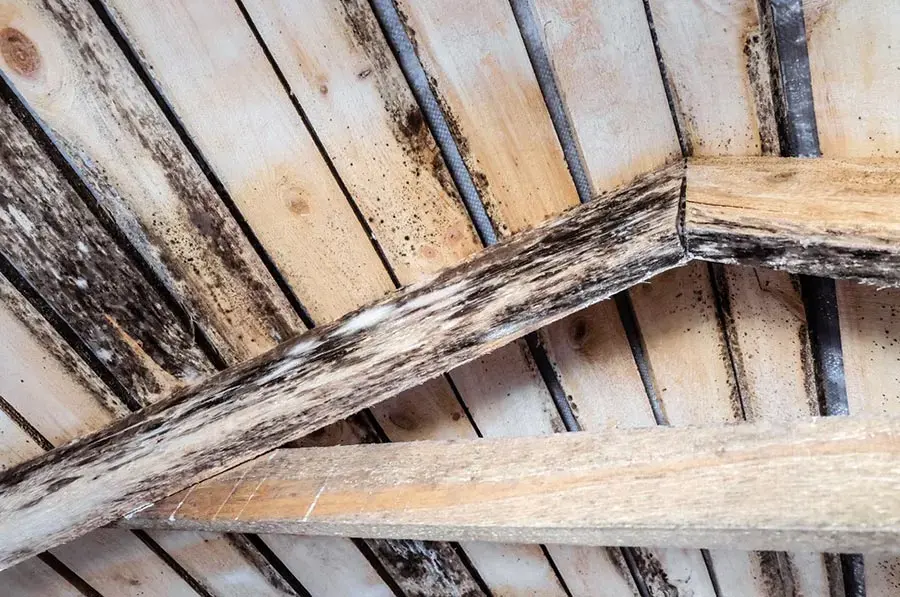 Roof Leak Water Damage in JacksonvilleWind and ice damage to historic core roofs, dried out before the ceiling below sags.View service
 Burst Pipe Cleanup in JacksonvillePipe failures in homes built before 1990, dried inside the wall cavity and not only on the surface.View service
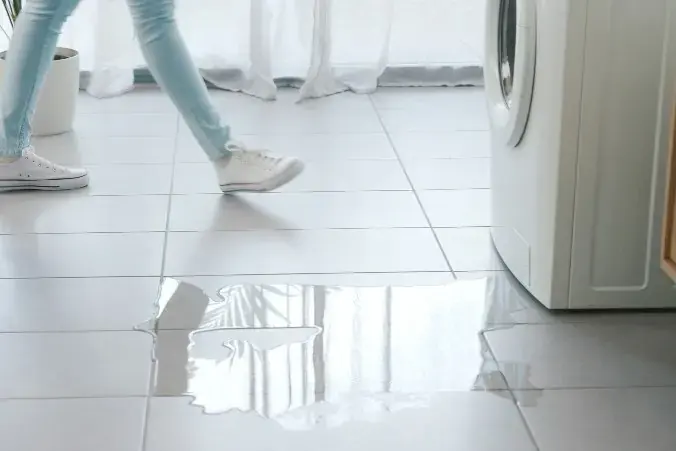 Appliance Leak Cleanup in JacksonvilleA washer, dishwasher or ice-maker leak that ran unnoticed beneath a floor or cabinet.View service
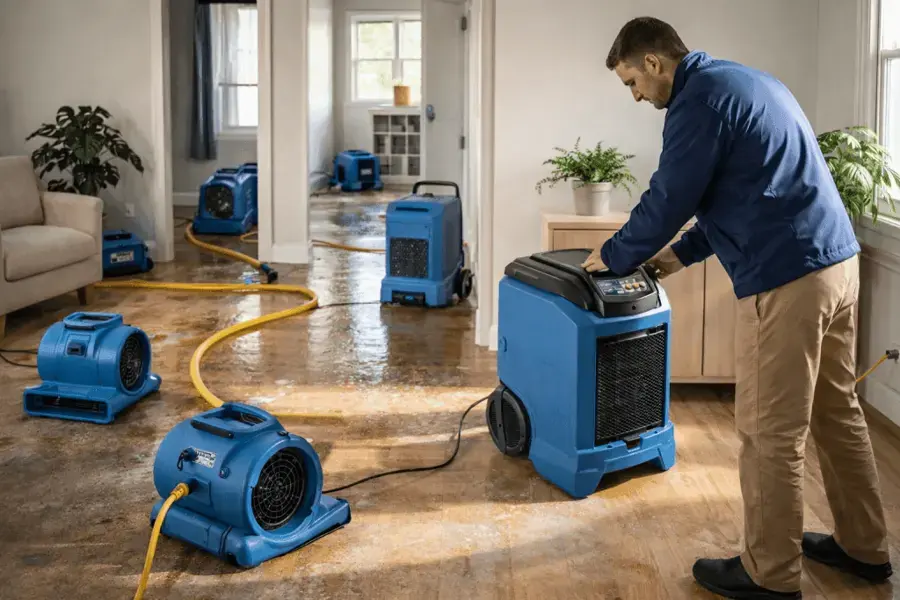 Structural Drying in JacksonvilleOld masonry, plaster and framing dried carefully, with readings logged against a clear goal.View service
Ceiling Leak Water Damage in Grants PassA tub, toilet or supply pipe above lets go, and the ceiling below is opened and dried.View service
 Water damage restoration in JacksonvilleAll fourteen services are tailored to Jacksonville's historic masonry, creek corridors, hillside streets and owner-occupied homes.View the town page
How do I know if a ceiling is about to fall?
Look for a visible bulge, a sag, drips, or cracks that open along a stain. If any appear, stay out of the room below and call, because wet drywall and plaster are heavy.
Why open the ceiling at all?
A closed ceiling traps water and soaked insulation against the framing. A controlled opening lets it drain and gives dry air access, so the structure dries in days instead of weeks.
Does the water category change by source?
Yes. A supply pipe gives clean Category 1 water, a roof leak is usually Category 2, and a drain or toilet overflow can be Category 3. The source decides which materials stay and which go.
Can a leak from a unit above affect me?
In shared-wall buildings, yes. Water can cross a common wall or floor into the next space, so the crew meters both sides and checks the ceilings below the leak.
How long does a ceiling leak take to dry?
Typically three to five days after the wet material is out. Plaster and thick framing run longer, and structural drying in Jacksonville continues until readings match dry material.
Is a ceiling leak covered by insurance?
A sudden pipe or storm leak is often covered, while a long, slow leak may not be. Coverage depends on the policy, so check with your own insurer and photograph the stain before any repair.
Ceiling leaking in Jacksonville? Call now.
The extraction crew removes the water, and the drying team dries the cavity above and the walls below until readings are normal.
(888) 373-8814Get the ceiling dried now