Flood Water Cleanup in Medford, OR
About 4.5 percent of Medford lies in the 100-year floodplain, and Bear Creek plus its tributaries supply most of the city's flood risk. Water that gets inside is Category 3, so the restoration team cleans out silt, strips contaminated materials and dries the framing.
(888) 373-8814Creek water inside? Call for flood cleanup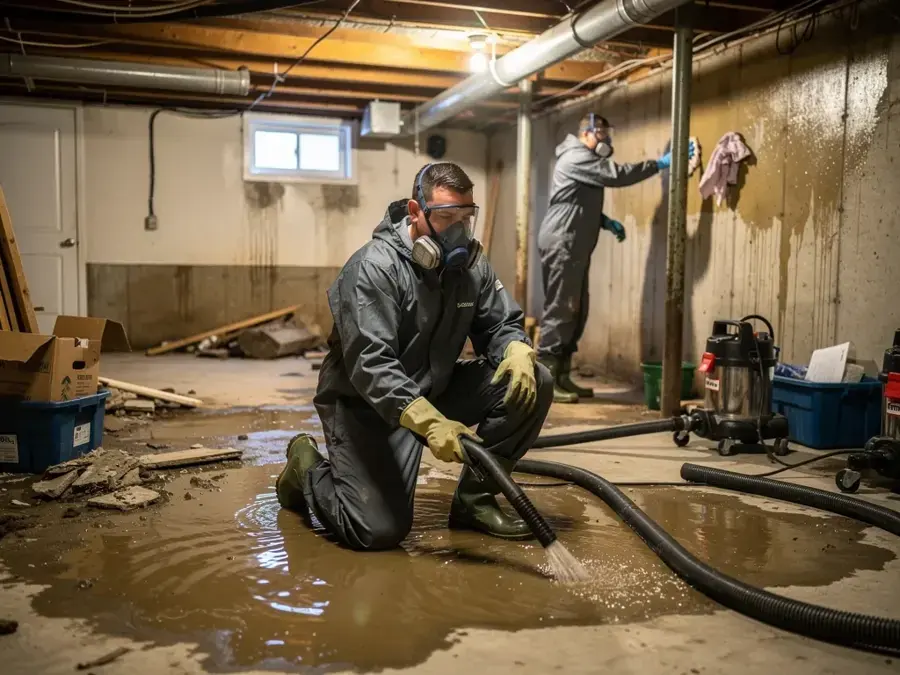
What to do after flood water has entered a Medford home
Do now
- 1Hold off entering. Stay out until officials say it is safe and the water has receded
- 2Keep power off. Do not restore power until an electrician has checked every outlet and appliance that touched water
- 3Protect yourself. Wear rubber boots, gloves and a respirator, because the water can hold sewage, fuel and yard chemicals
- 4Record the mark. Photograph the high-water mark on each wall and the damaged belongings before any cleanup
Hold off
- Letting kids or pets back into the house
- Using a generator inside the house or an attached garage
- Bleaching soaked drywall instead of removing it
How flood water cleanup is handled by the Medford restoration crew
The job runs in two phases: remove the contamination first, then dry whatever stays. Soaked porous items do not get a second chance.
Rapid local response
The response team works day and night across Medford and the Rogue Valley, weekends and storm nights included, and treats active water as urgent.
IICRC S500 drying standard
The drying team works to the industry drying standard and pulls equipment only when readings say dry, not when a surface looks dry.
Claim-ready documentation
Moisture maps, daily readings and timestamped photos go into a drying log that an adjuster, a landlord and the owner can all read.
Rogue Valley water experts
Crawl spaces, manufactured homes, wells, septic systems and old galvanized pipe are everyday work, so the crew checks under the floor, not just the wet room.
What does flood water cleanup cost in Medford, OR?
Expect flood water cleanup in Medford, OR to land between $3,000 and $25,000 or more. Shallow water that stayed in one area costs the least; water that spread across a floor or climbed the walls costs the most.
- Garage or shallow water$3,000 to $7,000
- Pump-out
- Silt removed
- Surfaces treated
- Water across a floor$7,000 to $15,000
- Wall cuts above the mark
- Flooring out
- Framing dried
- Deep water, whole level$15,000 to $25,000+
- Gutting to the studs
- Sealed containment
- Extended drying
The drivers are the water category, the square footage, the material class and how fast drying started. For a planning range, try the water damage cost calculator.
The flood water cleanup process in Medford
- 1
Pump and shovel out
The extraction crew pumps off remaining water and removes silt, so floors can be inspected and washed.
- 2
Cut above the mark
Drywall and insulation are cut above the high-water mark, and carpet, cushion and soaked cabinets are hauled away.
- 3
Clean and treat
Hard surfaces are scrubbed, then an EPA-registered antimicrobial is applied for its labeled contact time with HEPA scrubbers running.
- 4
Dry and verify
Desiccant and LGR dehumidifiers pull moisture from studs, plates and subfloor, with readings continuing until the goal is met.
The City of Medford names Bear Creek and its tributaries Lazy Creek, Larson Creek, Crooked Creek and Lone Pine Creek as the streams that flood, and says about 4.5 percent of the city lies in the 1 percent annual chance (100-year) floodplain. That is a small share of the city, but it is where creek water reaches buildings, and a long winter storm can push more homes into trouble than the map suggests.
What past floods show
The January 1, 1997 Bear Creek flood damaged about 1,200 homes in Jackson County, most of them mobile or manufactured homes. The city says 8.5 inches of rain fell in under three days, and at Medford Mobile Estates water rose 3.5 feet in 30 minutes. The NWS gauge on Bear Creek at Medford puts flood stage at 10 feet, when water begins entering mobile home parks, and at 13 feet water is over the Barnett Street bridge.
How creek water is classified
IICRC S500 puts rising creek and surface water in Category 3, alongside sewage, and that classification shapes the work:
- Anything absorbent that the water reached, including drywall, insulation, carpet and cushion, is removed instead of dried.
- Drywall is cut above the waterline so wicked moisture leaves with it.
- Hard surfaces are scrubbed and sanitized with an EPA-registered product, then left to dry.
- HEPA air scrubbers run while materials come out.
Drying after the cleanout
With contamination gone, the remaining work is drying framing, subfloor and any under-floor space. The drying team keeps taking readings until the framing meets the goal, and the log and dated photos join the claim file, which matters because flood claims are reviewed closely. Flood damage usually sits under a separate flood policy, while rain that enters through a roof or wall belongs under storm water damage. Mobile homes get special attention in manufactured home water damage.
Where flood water cleanup is handled around Medford
Medford water damage pros work ZIP codes 97501, 97504 and 97502, from Downtown Medford and West Medford to the East Medford Foothills near Roxy Ann Peak. The drying team also covers the Biddle Road corridor, the Hillcrest District and homes near Bear Creek.
See every area coveredRelated water damage services in Medford
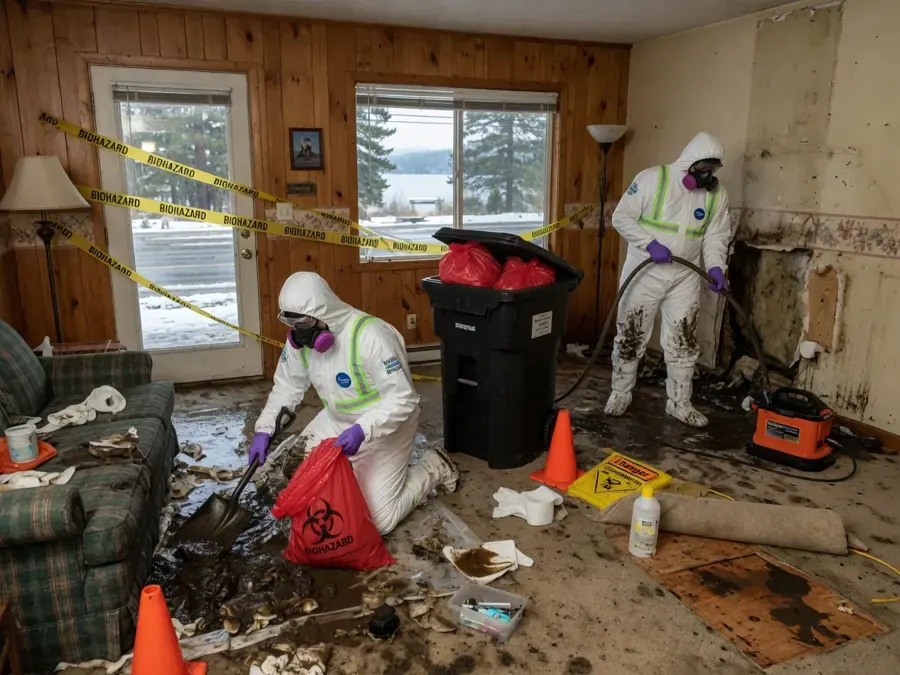 Sewage Backup Cleanup in MedfordBackups inside the house contained and removed as Category 3 before any drying begins.View service
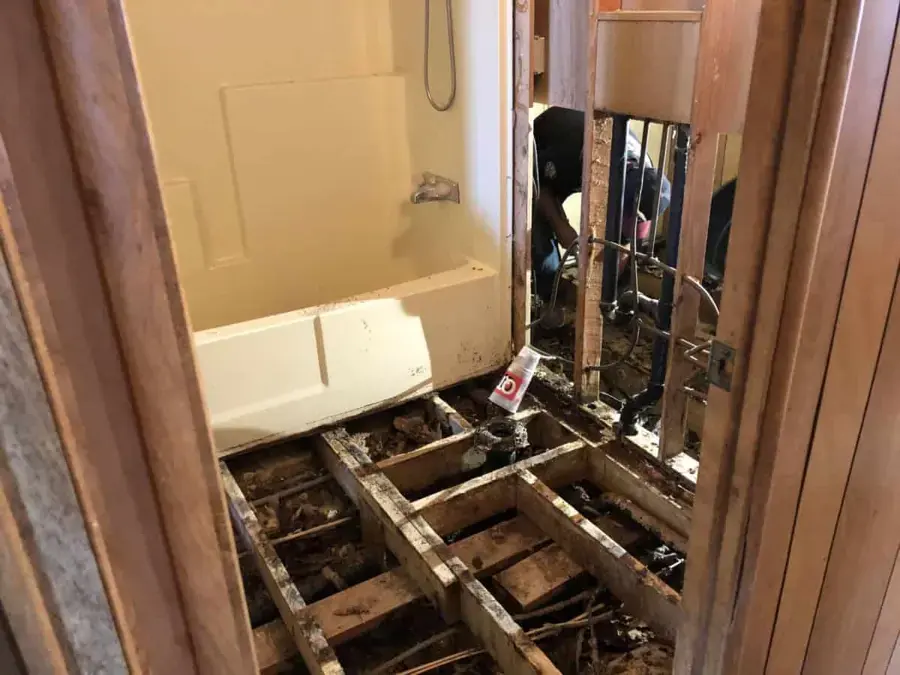 Manufactured Home Water Damage in MedfordBelly insulation and floors dried in a city with 1,253 mobile homes.View service
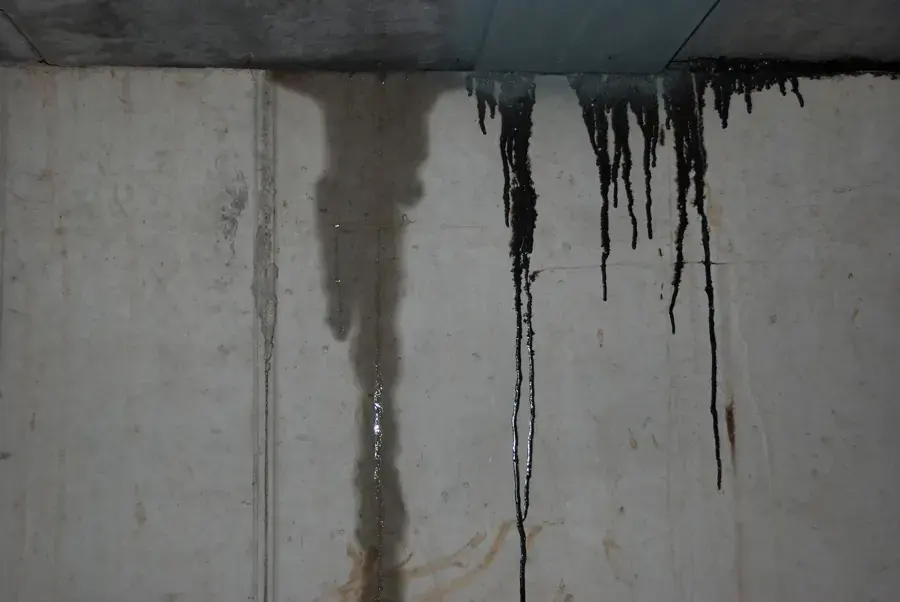 Storm Water Damage in MedfordWinter rain, snow and runoff driven through siding, windows and doors across the Rogue Valley.View service
 Water Extraction in MedfordStanding water pulled out of carpet, pad and subfloor before it wicks into the walls.View service
Flood Water Cleanup in Grants PassRising water from the Rogue River or a town creek, handled as Category 3 from the first step.View service
 Water damage restoration in MedfordFourteen services built around how Medford houses, apartments, mobile homes and storefronts take on water.View the town page
Is creek flood water really treated like sewage?
Yes. IICRC S500 classes it as Category 3 because it can carry soil, sewage, fuel and chemicals, so absorbent materials it reached are discarded rather than dried.
Which creeks flood in Medford?
The city names Bear Creek and its tributaries Lazy Creek, Larson Creek, Crooked Creek and Lone Pine Creek. Their water counts as Category 3 once it gets inside a building.
When does Bear Creek become a problem?
The NWS gauge at Medford shows flood stage at 10 feet, when water begins entering mobile home parks, and 13 feet puts water over the Barnett Street bridge.
Can furniture and belongings be saved?
Metal, glass and sealed hard goods can often be cleaned and kept. Upholstery, mattresses and paper that creek water soaked are usually thrown out.
Does homeowners insurance cover creek flooding?
Standard homeowners policies usually exclude flood damage, which falls under a separate flood policy. Terms vary, so check with your own insurer before assuming.
How many days does a flooded house need to dry?
Once the cleanout and removal are done, expect roughly five to ten days, longer for dense materials. Meter readings decide when the equipment leaves.
What should happen first after a flood?
Call the restoration team once officials say re-entry is safe, photograph the high-water mark before anything moves, then notify your insurer so the claim can start.
Creek water in your Medford home? Call now.
Creek water gets the Category 3 treatment: silt out, contaminated materials removed, surfaces sanitized and the structure dried until readings confirm it.
(888) 373-8814Get the Medford flood cleanup started