Storm Water Damage in Eagle Point, OR
Wind-driven rain, snowmelt and creek-side runoff can push water past siding, windows and thresholds. The Eagle Point restoration team extracts it, finds where it traveled and dries the structure before damage spreads.
(888) 373-8814Storm water inside? Call for cleanup now
First steps when storm water gets into an Eagle Point home
Do now
- 1Find the entry point. Check windows, doors, vents and the base of walls to see where the water came in, and block it if safe
- 2Move belongings up. Raise rugs, papers and electronics off wet floors and set furniture legs on foil or blocks
- 3Stay clear of power. Keep away from outlets and cords in wet rooms and switch off breakers from a dry panel
- 4Photograph the damage. Record the water, the entry point and any damp walls, then call for extraction and drying
Hold off
- Going outside during live storm conditions
- Wiping up with towels while water keeps rising
- Treating runoff as clean rain water
How storm water damage is handled by the Eagle Point restoration crew
Storm jobs begin with finding the entry, then extraction and moisture mapping, so the drying plan matches where water really went.
Rapid local response
The response team works day and night across Eagle Point and the Rogue Valley, weekends and storm nights included, and treats active water as urgent.
IICRC S500 drying standard
The drying team works to the industry drying standard and pulls equipment only when readings say dry, not when a surface looks dry.
Claim-ready documentation
Moisture maps, daily readings and timestamped photos go into a drying log that an adjuster, a landlord and the owner can all read.
Rogue Valley water experts
Crawl spaces, manufactured homes, wells, septic systems and old galvanized pipe are everyday work, so the crew checks under the floor, not just the wet room.
What does storm water damage cost in Eagle Point, OR?
Storm water damage cleanup in Eagle Point, OR typically runs $1,000 to $8,000. Rain through one opening sits near the bottom, several wet rooms cost more, and runoff that reaches the floor system or underfloor space lands near the top.
- One entry point$1,000 to $2,500
- Water extracted
- Wet pad removed
- Short drying run
- Several rooms$2,500 to $5,500
- Lower drywall cut
- Flooring lifted
- Daily readings
- Runoff beneath the house$5,500 to $8,000+
- Pumps for deep water
- Category 3 handling
- Extended drying
The drivers are the water category, the square footage, the material class and how fast drying started. For a planning range, try the water damage cost calculator.
The storm water damage process in Eagle Point
- 1
Find where it came in
The crew traces water to the opening, then covers or seals it temporarily so more rain cannot follow the same path.
- 2
Extract and open up
Standing water is pulled out, then soaked pad and wet lower drywall are removed so moisture is not left behind.
- 3
Dry the structure
Air movers and dehumidifiers run through the affected rooms while thermal imaging checks walls that look dry.
- 4
Confirm and record
Daily readings continue until framing and subfloor match dry material, and the log supports the insurance claim.
Eagle Point has a warm-summer climate with warm, dry summers, so the water that hurts homes here tends to arrive in winter. Winter storms and runoff along Little Butte Creek are the main stormwater concerns, and a heavy week can find any weak point in a roof, window or foundation edge. Snow and ice add a second route, as in mid-February 2026 when a winter storm warning covered Jackson County and melt followed the freeze.
Where storm water enters
Common routes include window and door thresholds, vent openings, gaps where siding meets the foundation and low spots where water pools against a wall. Houses in the Eagle Point Golf Community and elsewhere face the same weather, though newer construction can still leak at flashing or sealant that has worn. Water that finds a way inside travels along the floor and wicks up the drywall, often reaching a closet, a hallway or a second room before anyone sees a stain. That is why the first visit includes a full moisture map, not just a look at the spot where the water appeared.
Rain is not clean water
Rain that runs off a roof, across a yard and into a house picks up soil and debris, so it is usually Category 2. Water from creek-side runoff is Category 3, and the crew treats it that way. Hard surfaces get cleaned and porous finishes that touched it are removed before drying starts. If the runoff reached a floor system, crawl space water damage in Eagle Point covers the space below.
The creek and the record
Little Butte Creek jumped its channel during the New Year's Day flood of January 1, 1997, with moderate flooding observed in Eagle Point. Heavy storms are a reminder that runoff and the creek can work together, and an owner whose yard slopes toward the water should expect to see it at a door or garage first. When water rises past runoff into real flooding, flood water cleanup in Eagle Point takes over, with containment and removal of porous materials.
Where storm water damage is handled around Eagle Point
The Eagle Point water damage pros work all of ZIP 97524, from the Main Street storefronts to the Shasta Avenue and Linn Road areas and the OR 62 corridor along the Crater Lake Highway. Drying crews also visit the Eagle Point Golf Community, Butte Crest and homes by Little Butte Creek.
See every area coveredRelated water damage services in Eagle Point
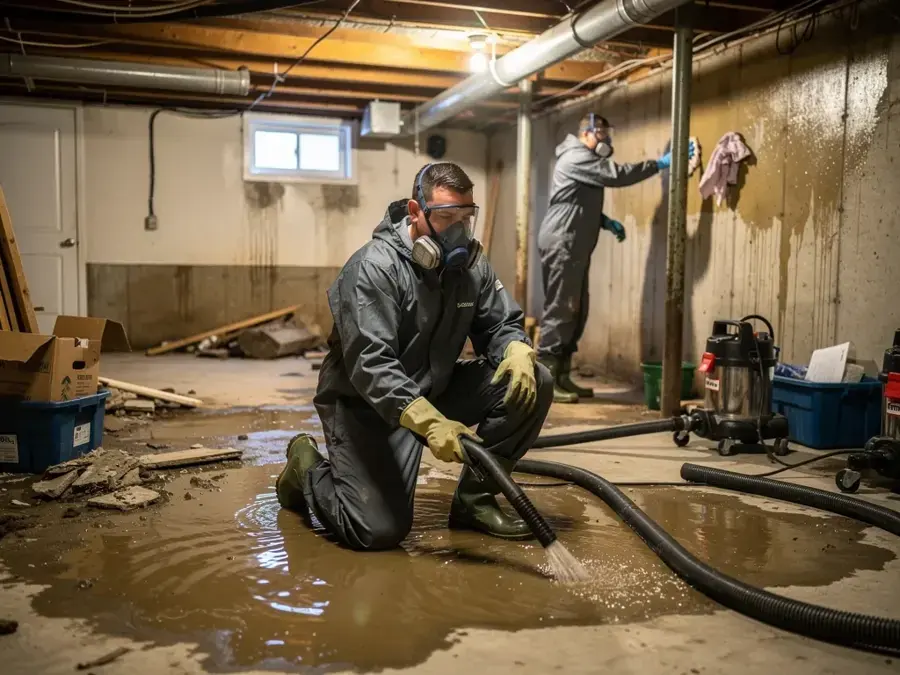 Flood Water Cleanup in Eagle PointLittle Butte Creek is the chief flood source here, so creek water is treated as Category 3.View service
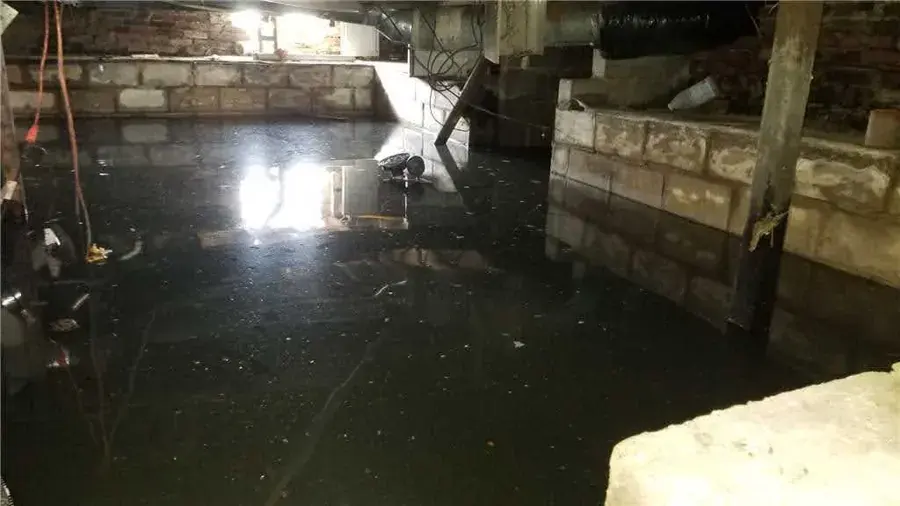 Crawl Space Water Damage in Eagle PointWater that collects under a house is pumped out, then the joists are dried to a measured reading.View service
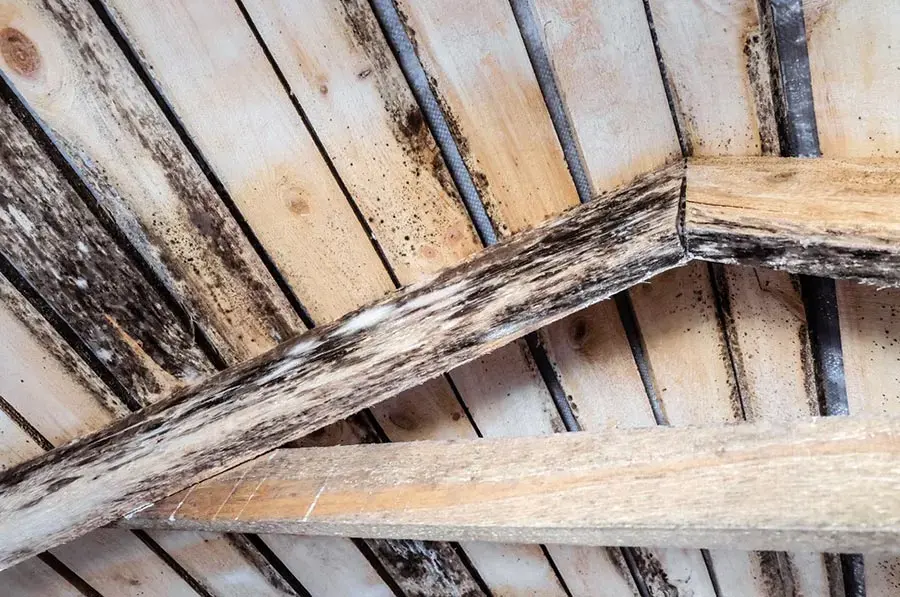 Roof Leak Water Damage in Eagle PointWinter rain, snow and ice find weak spots in frame roofs, and soaked insulation is dried.View service
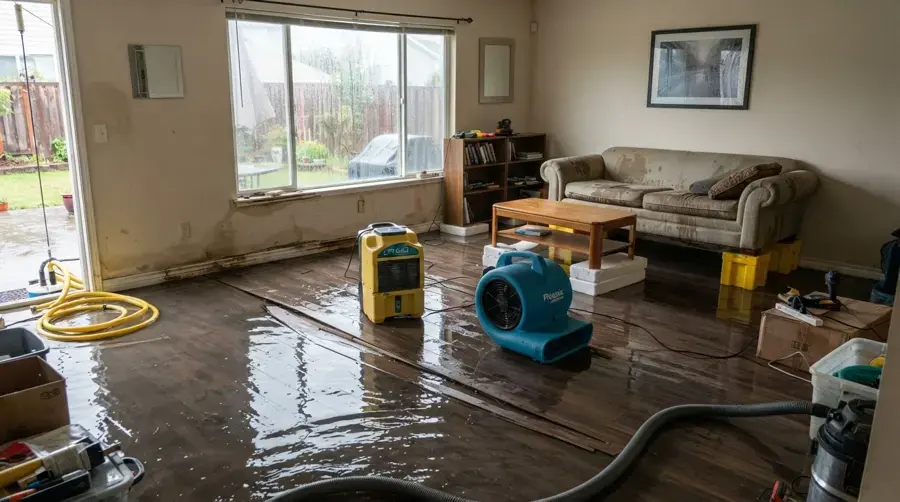 Water Extraction in Eagle PointStanding water from a failed pipe or creek overflow pumped out before it reaches the subfloor.View service
Storm Water Damage in Grants PassAtmospheric-river rain driven through siding, windows, doors and crawl vents.View service
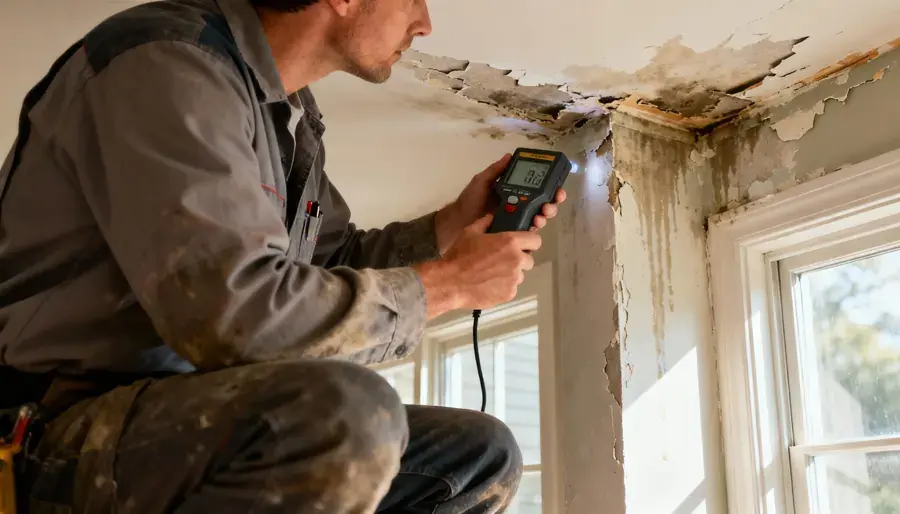 Water damage restoration in Eagle PointFourteen services, each shaped around Eagle Point's newer frame homes, manufactured homes and Main Street shops.View the town page
What counts as storm water damage?
It covers rain, snowmelt and runoff that enters a home through roofs, windows, doors or foundation edges, instead of coming from a failed pipe inside the house.
Is storm water considered clean?
Usually not. Rain picks up dirt and debris on its way in, so it is Category 2. Runoff from the creek or a drain is Category 3 and needs full containment.
When is storm season in Eagle Point?
Summers are warm and dry, so winter brings the main stormwater concerns. Heavy rain, snow and ice, and creek-side runoff along Little Butte Creek are the usual triggers.
How do I find where the water entered?
Check around windows, doors, vents and the base of walls. Thermal cameras and moisture meters help the crew trace damp areas that are not visible on the surface.
Can I dry things out with fans and a dehumidifier?
That works for a damp rug, not a wet wall. Water inside the cavity needs extraction, opening and calibrated equipment, or the framing stays damp and musty smells follow.
Does storm damage differ from a flood?
The difference is the source and the volume. Rain through an opening is storm damage, while creek water rising over a lot is flooding, with contamination and different insurance rules.
Does insurance cover storm water damage?
Wind-driven rain through a damaged roof or window is often covered, while rising creek water usually needs flood coverage. Policies vary, so confirm with your own insurer.
Storm water in your Eagle Point home? Call now.
The entry is found first, extraction follows, and the drying team stays until every wet wall reads dry.
(888) 373-8814Dry out the storm damage