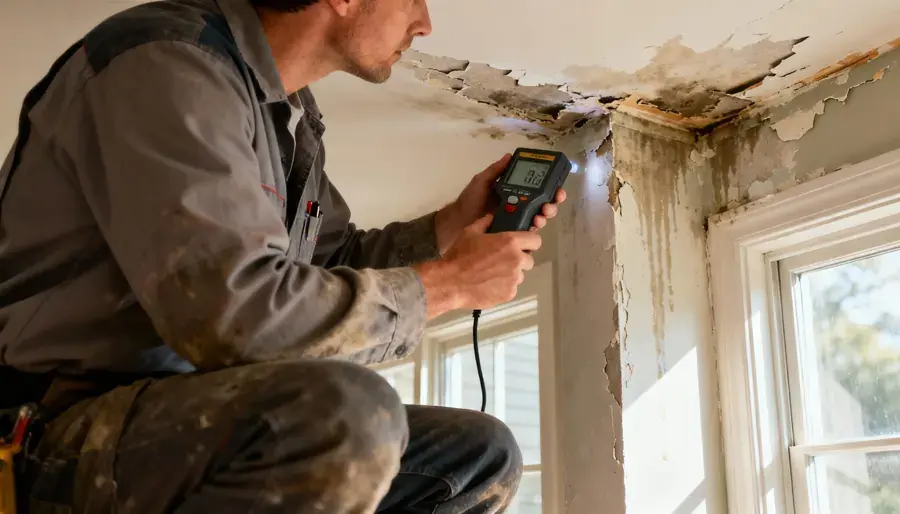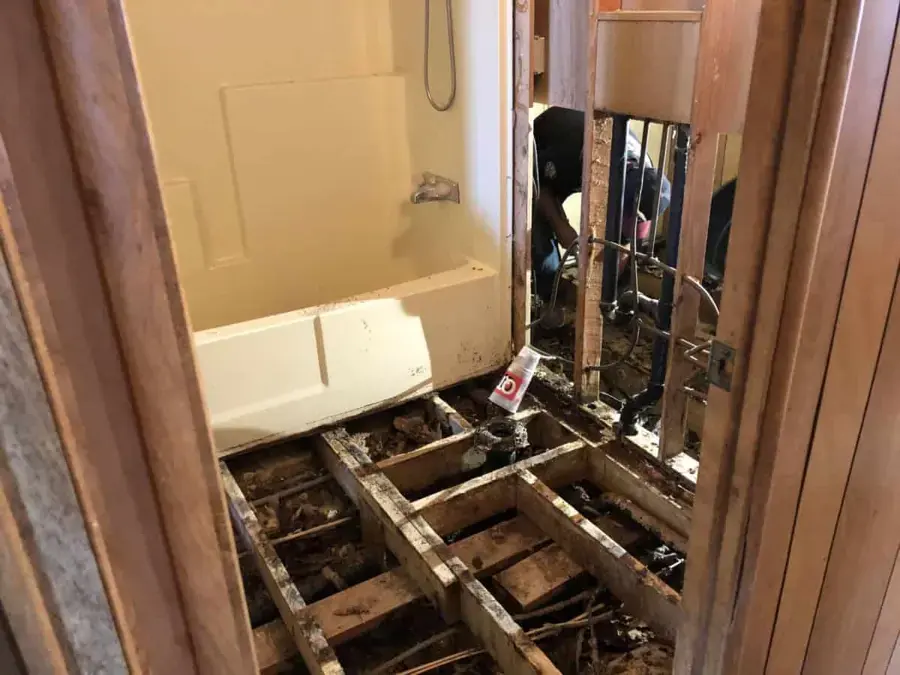
A large share of the homes across Josephine County are manufactured homes, and many of them hide their plumbing in a place no one looks: the underbelly.
Key takeaways
- Supply pipes in a manufactured home run through the belly under the floor, so a leak can soak insulation and decking while the rooms above stay dry.
- Polybutylene supply pipe was common in homes and manufactured homes from roughly 1978 to 1995, and it is a frequent source of failures.
- Swollen floors, a soft spot near a bathroom and a sagging belly are the usual signs.
- The water has to be stopped, the wet belly insulation removed and the decking dried, not just patched.
- A leak found early can stay a small repair, while a slow one can wet the whole floor system.
Why the damage hides under the floor
In a manufactured home the floor is a sandwich. A layer of decking sits on the floor frame, insulation fills the space below, and a thin belly wrap closes it from underneath.
Supply pipes, drain pipes and often the water heater connections run inside that space. When a pipe lets go there, the water has nowhere to go but into the insulation.
The insulation soaks it up like a sponge and holds it against the underside of the floor. The rooms above can feel and look normal for weeks.
Water in the belly follows gravity and the shape of the floor. It collects at low spots, under bathrooms and along the seams where the home was joined at the factory.
In a home built in sections, that seam is a common place for water to pool and wet the decking on both sides.
Wet insulation can also carry moisture sideways. A leak at a kitchen sink can show up as a soft patch near a hallway several feet away.
Common causes in older Josephine County homes
Not every belly leak starts the same way. Age and cold drive most of them.
- Polybutylene pipe: This gray plastic supply pipe was common in homes and manufactured homes from roughly 1978 to 1995, and it can crack at fittings.
- Freeze splits: Winter frost reaches pipe under the home, and the split shows up at the thaw.
- Worn fittings and shutoff valves: Crimp fittings and old valves under sinks and toilets can weep for months.
- Water heater connections: A drip at a heater or its relief valve can run into the belly.
- Drain pipe joints: A loose slip joint under a tub sends dirty water into the insulation.
Frost in the Rogue Valley
Grants Pass has frosty nights through winter and hard freezes most years. A manufactured home sits high off the ground, so cold air moves freely under it.
A pipe in the belly without heat tape or enough insulation is exposed on every side.
Signs the belly is wet
A wet belly seldom shows itself right away. The signs usually build slowly.
- A soft or bouncy floor: Wet decking loses its strength and flexes under foot.
- Swollen edges: Particleboard decking swells near a wall, a tub or a toilet and may peel the flooring above it.
- A sagging belly wrap: Water adds weight, and the wrap can balloon or hang down underneath.
- A higher water bill or a moving meter: Both point to water escaping with every tap off.
- Musty smell: An odor from the floor vents often means the insulation has stayed wet.
How a manufactured home leak is handled
A manufactured home water damage job begins with stopping the leak. The main water valve is closed and the failed pipe is found.
Then the wet material is dealt with in a set order. Each step has a reason.
Open the belly and pull the insulation
A section of the belly wrap is cut open so the wet insulation can be seen and removed. Soaked insulation cannot be dried in place, because it holds water against the floor.
The opening is later patched and sealed.
Extract and dry the decking
Any standing water is pulled out first. This is where water extraction comes in for pooling in the belly or under a bathroom.
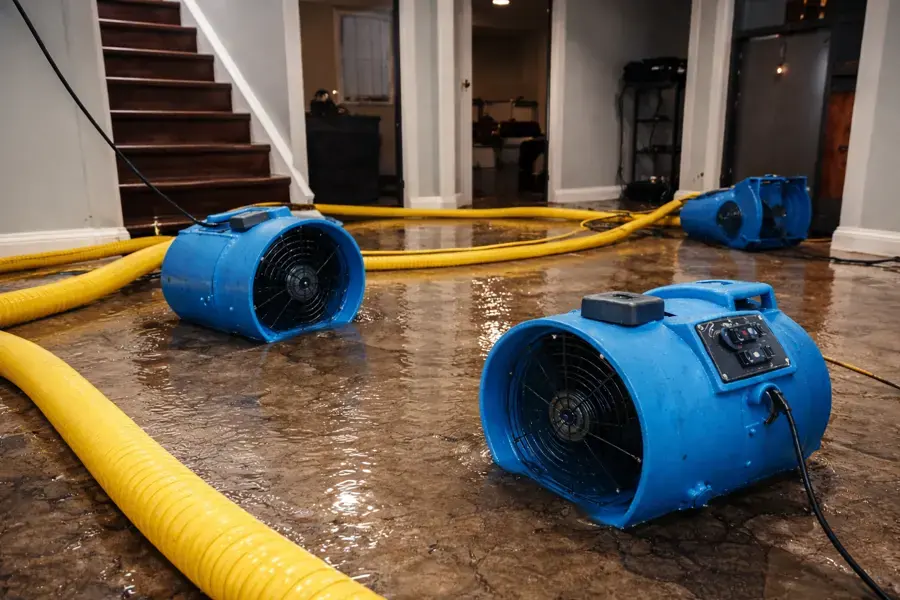
Air movers and dehumidifiers dry the decking and the floor frame until moisture readings return to normal. Decking that has swollen and lost its strength may need to be replaced.
Deal with the pipe
A burst pipe cleanup covers the water damage, not the plumbing repair. A plumber replaces the failed pipe once the area is open and the leak is stopped.
In a home with polybutylene pipe, the plumber may recommend replacing more than the one split section.
Why a patch is not enough
Taping or sealing the belly wrap without removing the wet insulation traps the moisture. Warm weather then turns that trapped water into a bigger problem under the floor.
Decking that stays wet loses strength, and flooring on top can buckle. By the time the floor feels soft, the damage has often been building for a long time.
That is why the readings matter. They show whether the floor system is actually dry, not just whether it looks it.
A manufactured home also has less margin than a site built house. The floor is thinner, and the decking is often particleboard, which swells and crumbles when it stays wet.
If the decking is replaced early, the repair stays small. If the wet insulation is left in place through a winter, the repair can reach the floor frame.
Nearby communities face the same problem
The pattern is not limited to Grants Pass. Manufactured home communities across the Rogue Valley deal with the same belly leaks and winter freezes.
Readers in Rogue River can see how the cleanup works there on the Rogue River manufactured home water damage page.
The steps are the same everywhere: stop the water, open the belly, remove what is wet, dry the frame and document the readings.
What to do right away
A few quick steps limit the damage while the cleanup is arranged.
- Shut the main: Close the water valve at the home and open a tap to relieve pressure.
- Stop using water: No showers, washers or dishwashers until the leak is found.
- Photograph the belly: Pictures of sagging wrap, wet insulation and swollen floors support a claim.
- Avoid walking on a soft floor: Wet decking can give way, especially near a tub or toilet.
- Look at nearby homes too: If neighbors share a similar pipe age, the same failure may be on its way.