Medford has 15,211 renter occupied homes, and many renters share walls, floors and ceilings with neighbors. A leak that starts in one unit does not stay there.
Key takeaways
- Medford has 15,211 renter occupied homes and 2,462 units in buildings of 50 or more units, so shared plumbing and shared floors are common.
- A washer, dishwasher or water heater leak in one unit can drop water into the ceiling of the unit below.
- A brown ceiling stain, a sagging patch or dripping from a light fixture needs a report to the property manager right away.
- Photos with dates, written notice and moisture readings protect a renter and speed up a claim.
- Wet drywall and insulation are opened and dried, and the ceiling is repaired after the readings return to normal.
How a leak upstairs reaches the unit below
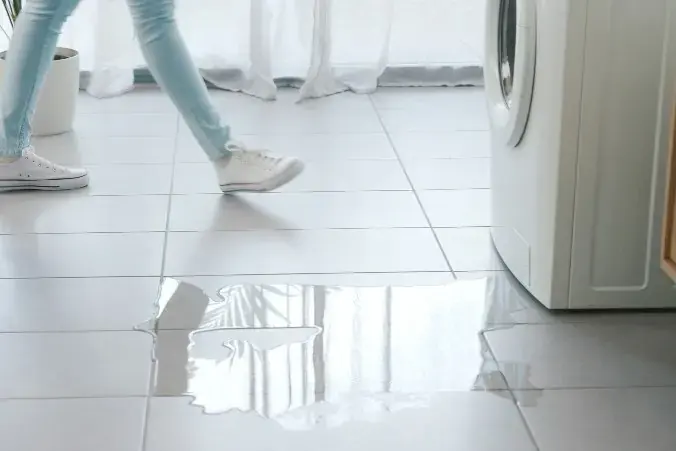
In a multi unit building, the floor of one unit is the ceiling of the next. A leak that spills onto a kitchen or laundry floor moves down through the subfloor and into that ceiling.
The path is usually along a pipe chase, a light fixture hole or the seam where the drywall meets a wall.
Medford has 2,462 units in buildings of 50 or more units, and the longer the pipes and the more units that share them, the more places a leak can start.
- Washer hose or drain: A split hose or an overflowing standpipe sends a large amount of water at once.
- Dishwasher supply or drain: A loose connection leaks slowly under the cabinet for days.
- Water heater: A tank that fails in a utility closet can drop water through the floor.
- Toilet or tub overflow: A clog or a slow seal can wet the floor above a living room.
What a wet ceiling looks like
Ceiling damage starts quietly. Early signs are easy to confuse with old stains, so any change after a neighbor's activity is worth a closer look.
A ceiling that was white last week and has a faint ring today deserves a photo and a note to the property manager, even if it looks small.
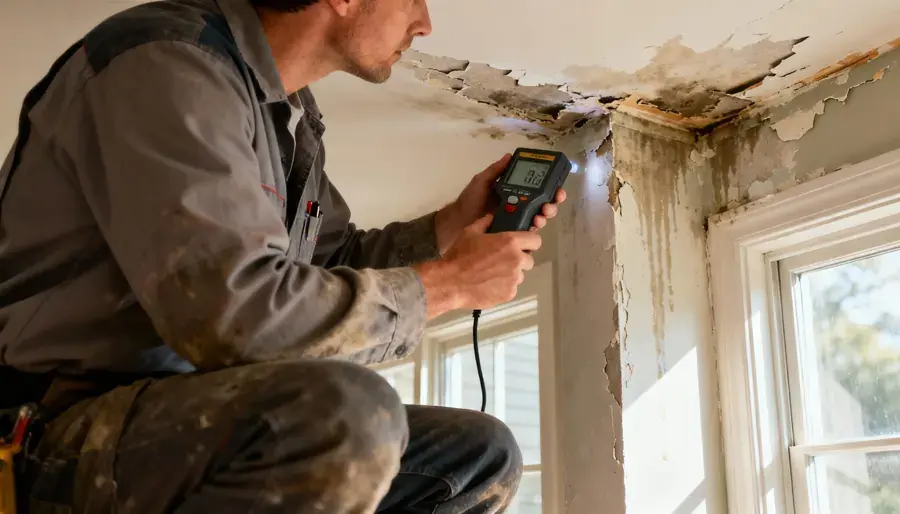
- A brown or yellow stain: Water has passed through the drywall and left minerals behind.
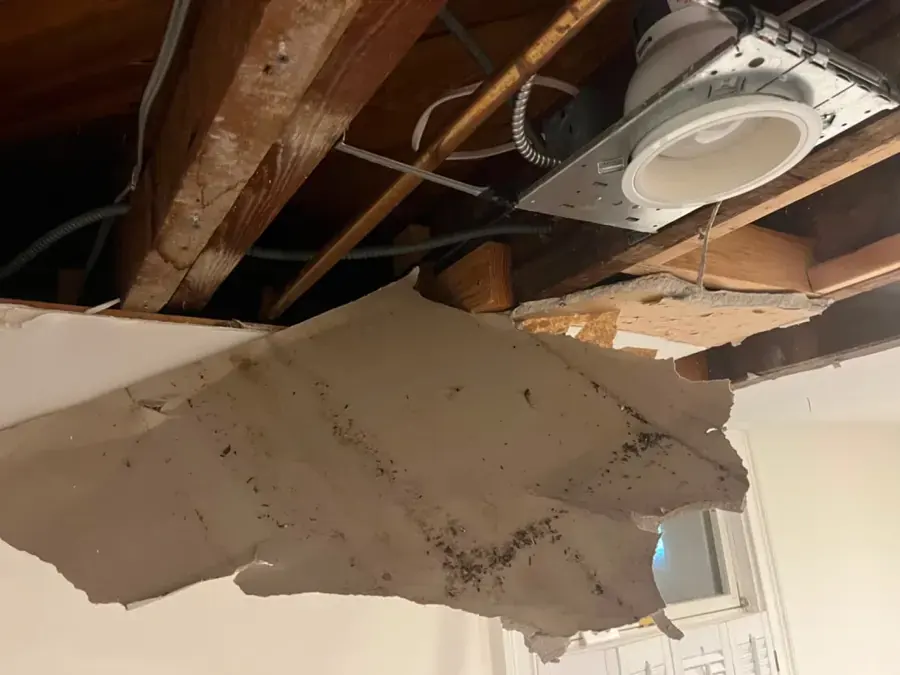
- A sagging or bubbled patch: The drywall is holding water, and the ceiling may be about to fail.
- Dripping from a fixture: Water is running along the wiring, so the light should stay off.
- A damp smell or a warm wet spot: The cavity above is wet even if the surface looks fine.
- Peeling paint or a soft texture: The drywall has been wet for some time.
When a ceiling is a safety problem
A ceiling that is bulging with water can come down without warning. It should be left alone and kept clear of people and furniture.
If water is coming through a light fixture or an outlet, power to that circuit should stay off until it has been checked.
What a renter should do first
A renter does not usually control the building or the neighbor's appliance. What a renter can control is how quickly the problem is reported and how well it is documented.
- Tell the property manager in writing: Send an email or text so the date and time are on record.
- Photograph and video the damage: Include the stain, the fixtures and any damaged belongings.
- Move belongings: Lift furniture and electronics from under the wet area.
- Keep receipts and notes: Record anything thrown out, damaged or paid for.
- Check renters insurance: A policy may cover belongings and extra living costs even when the source is another unit.
Why the source and the damage are separate problems
The leak itself belongs to whoever owns or manages the appliance or pipe, and the property manager handles that. The wet ceiling and floor below are a damage problem with its own timeline.
A building can fix the source and still leave wet drywall and insulation behind. Water trapped in a ceiling cavity does not stop being a problem just because the leak was repaired.
That is where a ceiling leak water damage job comes in. It looks at what the water reached, not just where it began.
How the cleanup works
The work follows a set order. Each step has a reason, and skipping one can leave water behind.
A job that starts as an appliance leak cleanup in the unit above often ends with a ceiling and wall repair below.
In the unit with the leak
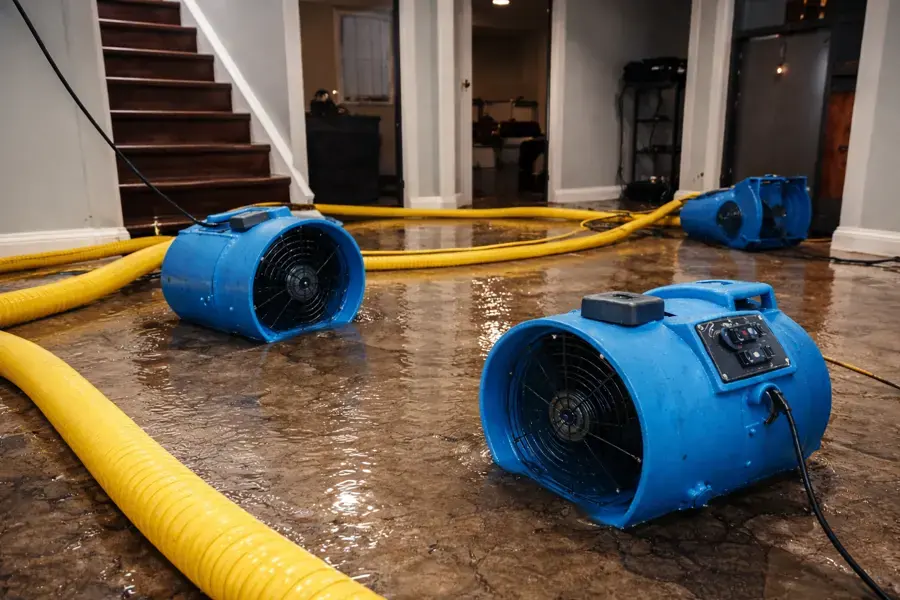
Standing water is extracted and the floor is checked with a moisture meter. Wet cabinet toe kicks, baseboards and flooring edges are opened if the readings call for it.
Air movers and dehumidifiers are set up, and the readings are logged each visit.
In the unit below
The wet section of the ceiling is opened so the cavity can be seen and the insulation checked. Drywall that has sagged or softened is cut out, and the rest is dried in place.
Once the readings match a dry reference, the opening is left ready for patching and paint.
Who handles what
Responsibility depends on the lease, the building owner and the insurance involved, so it is worth asking early instead of guessing.
A written scope of the drying work and the moisture readings give everyone the same facts to work from. That makes it easier for the property manager, the neighbor's insurer and the renter's insurer to sort out the cost.
The same steps apply in other cities, and the page on ceiling leak water damage in Grants Pass shows how they work in a Grants Pass building.
The Medford hub lists every cleanup type in the city, from a single leaking appliance to a larger water loss.
Cutting the chance of a repeat
A renter can lower the odds of an upstairs leak on their own side of the wall, and can ask for a few simple things from the landlord.
- Replace old washer hoses: Hoses that are cracked or bulging can be replaced before they split.
- Know the shutoff: Learn where the water shutoff for the unit is, and ask the manager if it is unclear.
- Do not run appliances when away: A dishwasher or washer left running unattended is a common starting point.
- Report small leaks early: A damp cabinet or a slow drip is cheap to fix before it reaches a ceiling.