A tank water heater holds dozens of gallons, and when it fails, all of that water has to go somewhere. In Grants Pass homes, where the heater sits decides what gets wet.
Key takeaways
- In Grants Pass, water heaters most often sit in a garage or a closet, and the damage is very different in each place.
- A garage tank spreads water across the floor and toward anything stored there, including well equipment on rural properties.
- A closet tank sends water into wall framing, flooring and the rooms next door.
- A leaking tank is replaced, not repaired, so cleanup and replacement happen side by side.
- Shut off the cold water to the tank and the power or gas first, then deal with the water on the floor.
How a tank water heater fails
A tank water heater is a steel vessel lined to keep the water away from the steel. Over time that lining wears, and the steel can corrode from the inside.
Small leaks often start at a fitting, a relief valve or the drain valve. A seam failure is different, because it releases a lot of water quickly.
A tank that has been weeping for a while can suddenly let go. The first sign is often a wet floor, not a drip.
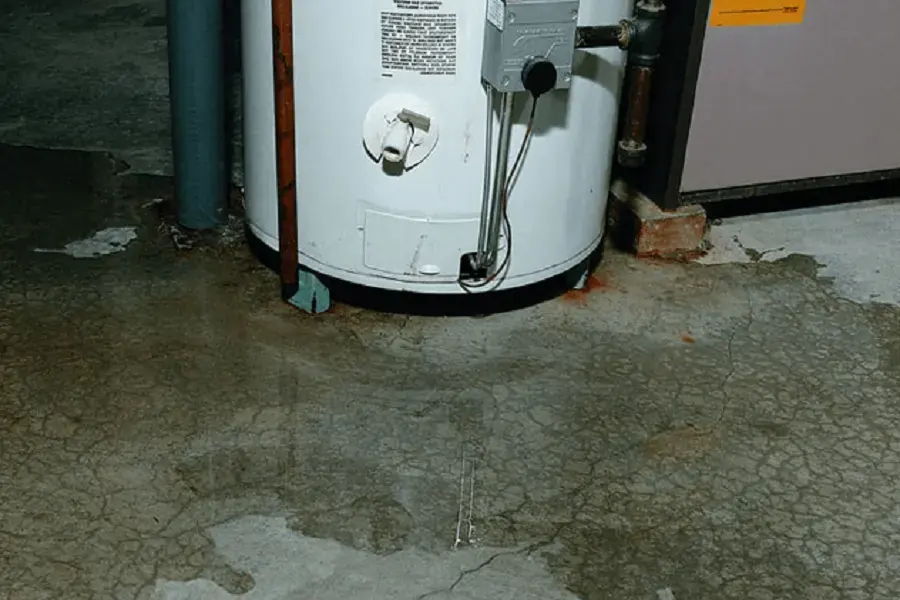
- Rust at the base: Orange stains or flakes at the bottom of the tank point to corrosion from inside.
- Water at a fitting: A drip at the inlet, the outlet or the relief valve is a warning that the tank is aging.
- Hot water that runs out fast: Sediment and tank damage reduce the usable water.
- Rumbling or popping: Sediment trapped on the bottom can boil and stress the steel.
- A damp floor with no clear source: The leak may be coming from the underside of the tank.
The garage water heater
In Grants Pass, water heaters commonly sit in garages. A garage floor is usually a concrete slab, and concrete does not absorb water.
So the water spreads. It runs across the floor, pools in low spots and soaks cardboard boxes, stored tools and anything sitting on the slab.
On rural properties outside city limits, the garage may also hold a well pressure tank or pump equipment. A water heater leak in that room can reach those connections.
Where garage water ends up
Water follows the slope toward the door, toward a floor drain if there is one, or toward the wall shared with the house.
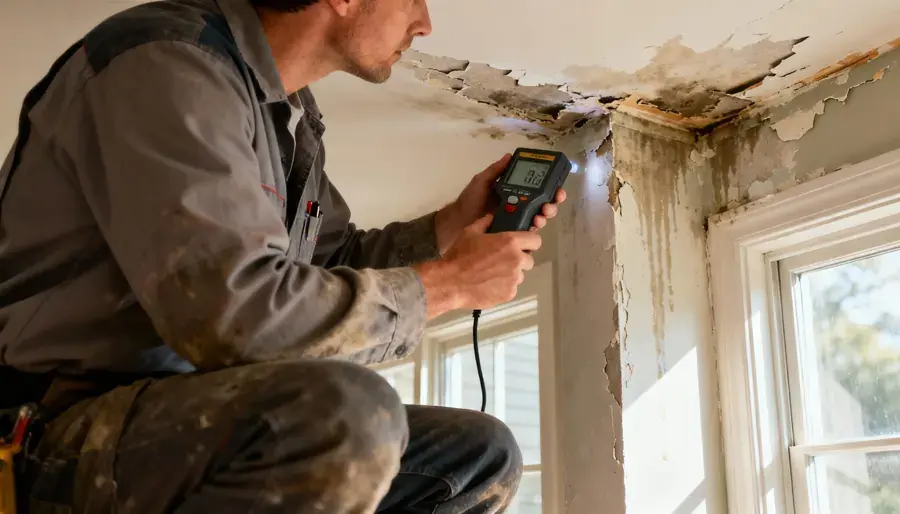
At the shared wall, it can wick into the bottom plate and the drywall, which is the part that causes real damage.
What the cleanup covers in a garage
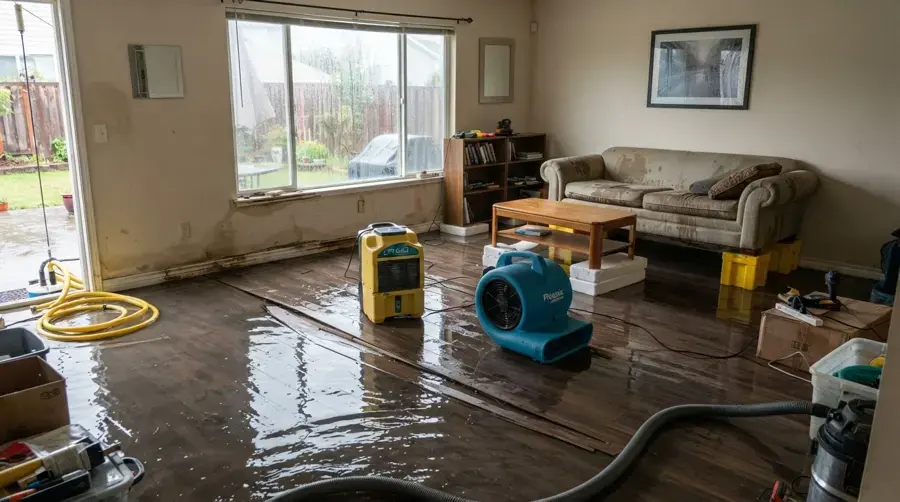
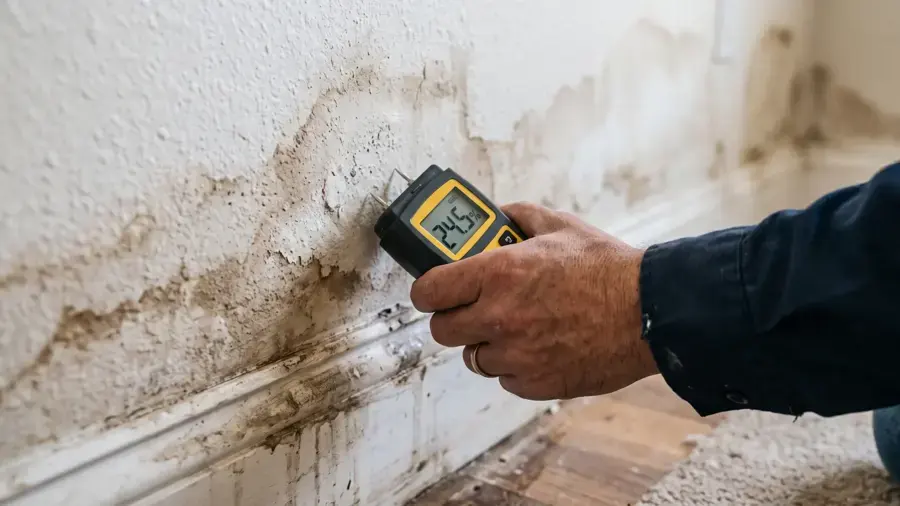
Water extraction removes the standing water first, using a pump or a wet vacuum. Then the base of the shared wall is checked with a moisture meter.
If the wall is wet, baseboard and the lower strip of drywall are opened so the cavity can dry.
The closet water heater
The other common spot is a closet, where the heater is tucked behind a door in a hallway or utility space.
The floor of a closet is often wood or a thin floor covering, and the walls are close on every side. Water has far fewer places to spread, so it goes into the structure.
It runs under the door, into the carpet in the hall and down into the subfloor. In a house with a crawl space below, it can reach the joists.
- Wall framing: Water wicks up the bottom plate and into the cavity behind the drywall.
- Flooring next door: Hardwood and laminate in the hall can cup or lift as the water spreads.
- Subfloor and joists: Water that gets past the floor covering wets the wood underneath.
- Hidden pockets: A closet floor may trap water long after the surface looks dry.
What to do in the first minutes
Acting in order matters more than acting fast. Each step protects the next one.
Do not step into standing water near a heater that is still powered.
- Cut power or gas: Turn off the breaker for an electric heater or the gas valve for a gas unit, if it can be done safely.
- Close the cold water supply: The shutoff valve above the tank stops new water from filling it.
- Open a hot tap: This relieves pressure and helps the remaining water drain.
- Move belongings: Lift boxes, rugs and stored items off the wet floor.
- Photograph the tank and the floor: Pictures show the source and how far the water spread.
Cleanup after a water heater leak
A water heater leak cleanup is a clean water job when the leak is only tank water. That makes it simpler than a sewage backup or a flood, though it still moves fast.
The team extracts the water, removes materials that cannot dry, and places air movers and dehumidifiers. Moisture readings decide how long the equipment runs.
When walls and floors are involved
If the leak reached a wall, the work follows the water into the cavity. That drying belongs to structural drying, where readings are taken in the framing and subfloor.
A floor that looks dry can still read wet underneath, so the equipment stays until the numbers match a dry reference.
When a different appliance is the source
Not every wet utility room starts with the heater. A washer hose or a dishwasher can look the same from the doorway.
That is covered under appliance leak cleanup, which uses the same steps with a different starting point.
Replacing the tank
A tank that leaks from the body is not repaired. It is replaced, and a plumber handles the new unit and the hookup.
Cleanup does not replace that work, and the plumber does not dry the structure. The two jobs are separate but should be scheduled close together, because a new tank installed over a wet floor protects nothing.
Insurance adjusters usually ask for the same few things: photos of the failed tank, a record of the moisture readings and a written scope of the drying work.
Keeping the old tank until the claim is settled can also help, because it shows where the failure happened.
Lowering the risk
A water heater cannot be made leak proof, but a few habits reduce the damage when one fails.
- Know the shutoff: Everyone in the house should be able to find and close the cold water valve above the tank.
- Look at the tank each season: Rust, wet insulation or a damp floor are early warnings.
- Keep the floor clear: Cardboard and fabric under a tank soak up water and hide a slow leak.
- Replace an old tank before it fails: A heater near the end of its life is a leak waiting to happen.