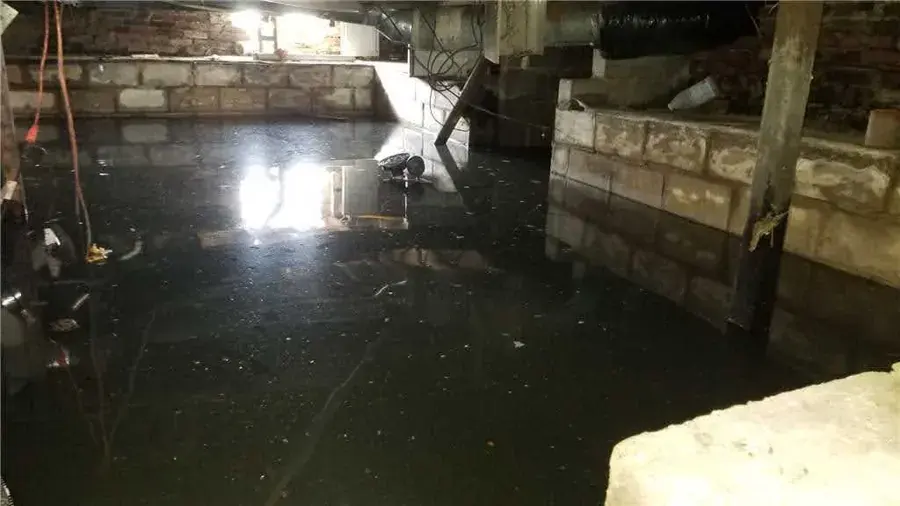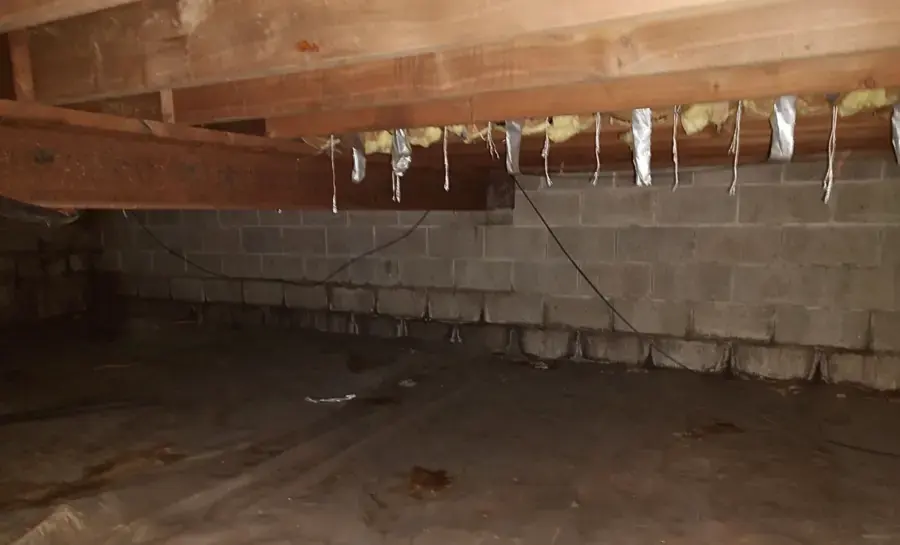
In Grants Pass, a hard freeze is usually not the moment the damage happens. The pipe splits in the cold, and the water shows up when the thaw starts.
Key takeaways
- Hard freezes come most winters in Grants Pass, and supply pipe in a vented crawl space is the part of the house most exposed to them.
- A frozen pipe often splits while ice blocks it, then leaks only after the ice melts and water moves again.
- At the first sign of a leak, shut off the main water valve before anything else.
- Wet insulation, a damp floor above the crawl space and a faint hiss are common first clues.
- Water in the crawl space has to be removed and the framing dried to a reading, not just wiped dry.
Why the damage shows up at the thaw
Water expands when it freezes, and the ice can stretch a copper, galvanized or plastic pipe past its limit. The split forms while the pipe is still solid with ice.
Nothing leaks at that point, because the ice itself plugs the break. The house can look and sound normal through the coldest night.
When the air warms, the ice melts and the pipe is open again. Pressure pushes water through the split, and a small crack can empty a surprising amount of water under a floor before anyone notices.
That delay is why the call usually comes on a mild afternoon after a frost, not at 3 in the morning during the freeze.
Why Grants Pass crawl spaces take the hit
Grants Pass has frosty nights through the winter, hard freezes most years and the occasional valley snow. Much of the older housing sits over a crawl space instead of a basement.
Early 1900s bungalows and Craftsman homes around downtown and the historic district stand on post and pier or short perimeter foundations. Mid century ranch homes from the 1950s to the 1970s add to that stock.
Full basements are uncommon, so the crawl space is where supply pipe, drain pipe and often the water heater connections run. Vents let in cold air, and that is where a pipe with no insulation is most likely to freeze.
Pipe materials that fail differently
Many homes from before 1960 still carry galvanized steel supply pipe, which is rough inside and weak at the threads.
Polybutylene was common in homes and manufactured homes from roughly 1978 to 1995, and it can crack at fittings when it is stressed by cold.
Signs that a split is hiding under the floor
Most people never see the pipe, so the clues come from the rest of the house. A few of them are easy to miss.
Any one of these after a freeze is a reason to look under the house, even if nothing is dripping.
- Low water pressure: A faucet that runs weak after a cold night can mean the pipe is cracked or still partly frozen.
- A running meter: If every tap is off and the water meter still moves, water is escaping somewhere.
- Cold, damp air from a floor vent: Moist air coming up through the floor suggests wet insulation below.
- Soft or cupped flooring: Hardwood that lifts at the edges or a floor that feels spongy points to water in the subfloor.
- A musty smell near a bathroom or kitchen: That odor means water has been sitting for more than a day or two.
What to do when the water starts moving
Speed matters more than anything else in the first hour. The goal is to stop the flow, then keep the water from soaking into wood.
A leak under the house rarely stays under the house. It follows the pipe, drips onto insulation and wicks up into the subfloor.
- Shut off the main: Close the main water valve for the house, then open a faucet at the lowest point to drain the pipes.
- Cut power to wet areas: If water is near the panel, outlets or a water heater, leave that area alone and turn off power at the breaker if it is safe to reach.
- Look for the clues: Wet or sagging insulation, a damp spot on the floor above, a hiss or a drip heard from the floor.
- Photograph everything: Pictures of the split pipe, the wet insulation and any water on the ground help later with an insurance claim.
- Do not thaw with open flame: A torch or heater near old wood and insulation is a fire risk and can finish a split pipe.
What the cleanup covers
A frozen pipe cleanup starts with finding the split and stopping the water, then removing what the water has already reached.
Standing water under the house is pumped out. Wet insulation and any torn vapor barrier come out, because soaked insulation holds water against the joists for weeks.
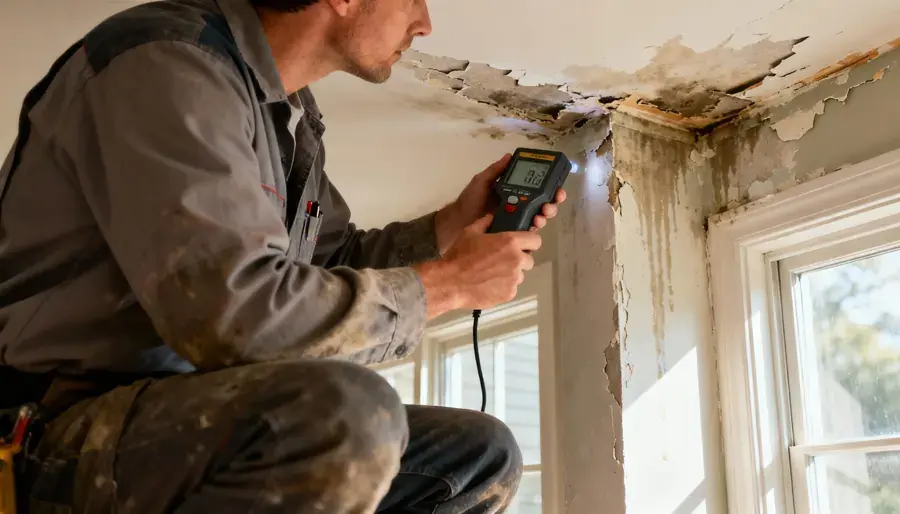
Then comes the part that decides the outcome. Joists, subfloor and any wet wall base are dried with air movers and dehumidifiers until moisture readings return to normal.
That process falls under structural drying, and it is the step that cannot be rushed or skipped.
Wet crawl space work
The crawl space water damage work focuses on the ground and the framing together. A dry floor above can hide a wet joist below.
Readings are taken before and after drying, so the file shows the wood reached a dry reading and not a guess.
When the pipe is inside a wall
Some splits happen in an outside wall. In that case the drywall or baseboard is opened just enough to reach the wet cavity.
A burst pipe cleanup follows the same logic: extract, remove what cannot dry, dry the rest, then document it.
Wet season follows the cold
Grants Pass has a dry summer, then Pacific storms and atmospheric rivers from November to March bring most of the year's rain.
A crawl space that was dry in August can take on rain water and a freeze leak in the same winter.
That is why a crawl space that has dried after a pipe split still gets checked again after the next heavy rain. Two sources of water can hide behind one stain.
Steps to lower the risk before the next freeze
None of these steps is a repair. They only reduce the chance that a hard freeze finds the weak spot.
- Insulate exposed pipe: Foam sleeves on supply pipe near vents and outside walls slow heat loss.
- Close vents when a freeze is forecast: Crawl space vents that stay open send cold air straight onto the pipe.
- Open cabinet doors: Cabinets on outside walls trap cold, so opening them lets house air reach the pipe.
- Let a faucet drip: Moving water is harder to freeze, so a slow drip at the farthest tap helps on the coldest nights.
- Know the main valve: Everyone in the house should know where it is and how it turns.